


What's Happening?
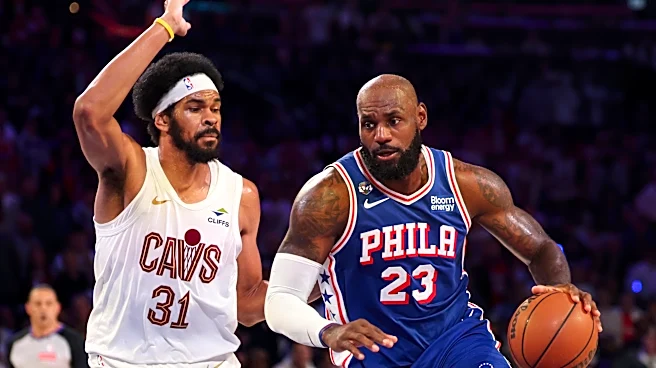
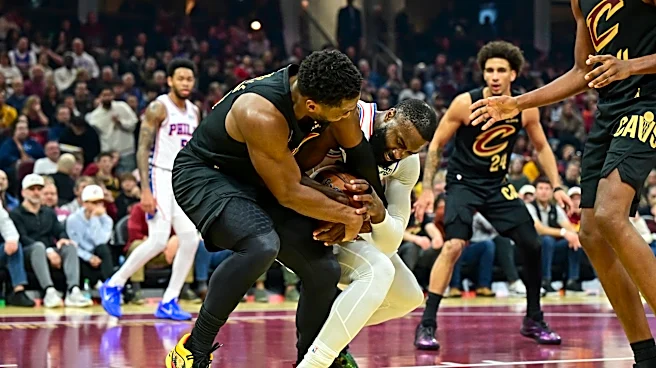
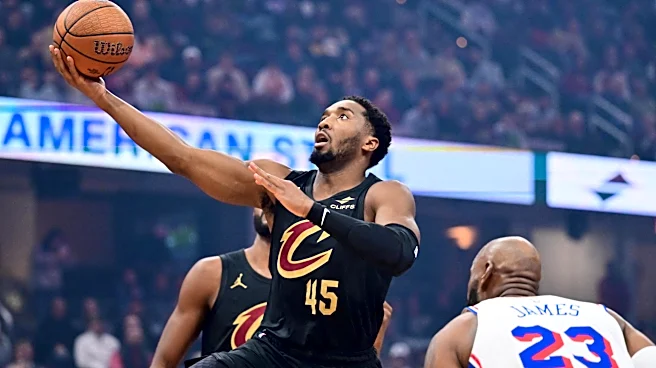
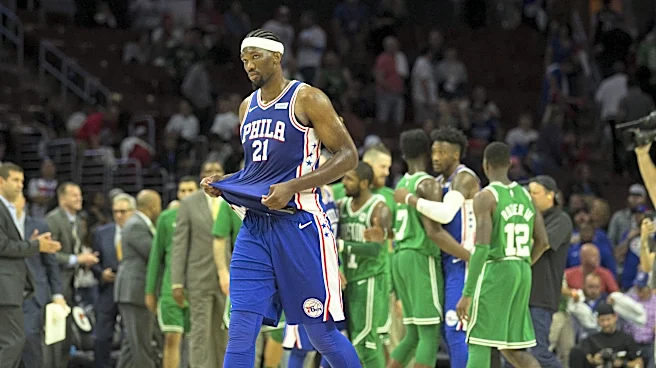
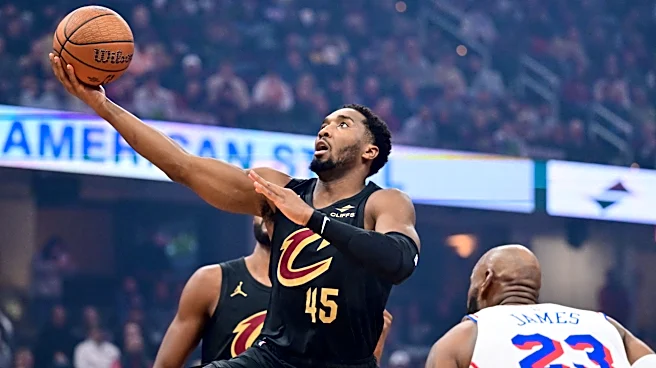
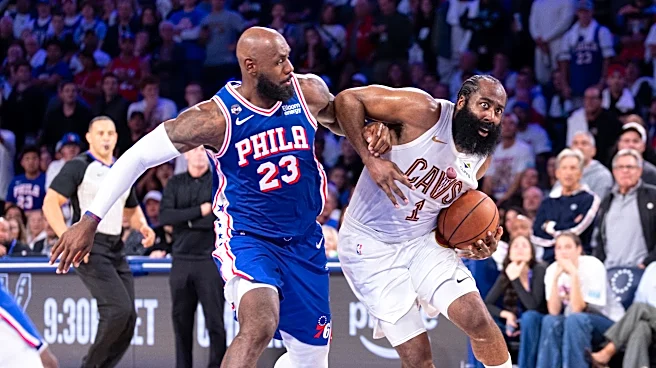
Philadelphia 76ers center Joel Embiid had a notably poor performance in a recent game against the Cleveland Cavaliers, failing to make any of his nine field goal attempts. This included going 0-for-2 from beyond the three-point line. Despite his struggles
from the field, Embiid managed to score six points by converting all six of his free-throw attempts. He also contributed seven rebounds, two blocks, and one assist, but recorded two turnovers. Embiid finished the game with a plus-minus rating of minus-15 in 25 minutes of play. This outing marks a significant low point for Embiid this season, as he has only shot over 50% from the field once in his games so far. The 76ers ultimately suffered a substantial defeat, with Embiid's offensive struggles being a key factor. This performance has raised concerns about his current form and offensive approach, which has increasingly relied on jump shots rather than attacking the basket.
Why It's Important?
Joel Embiid's recent performance is significant for the Philadelphia 76ers as it highlights potential vulnerabilities in their offensive strategy and Embiid's individual play. As one of the NBA's premier centers, his ability to consistently contribute offensively is crucial for the team's success, particularly in high-stakes games. A prolonged period of inefficient shooting or a reluctance to attack the rim could force the 76ers to adjust their offensive schemes, potentially placing more pressure on other key players. This shift in Embiid's game, characterized by a higher volume of jump shots, could make the team's offense more predictable and less potent against strong defensive opponents. If Embiid continues to struggle with his shot, it could impact the team's standing in the Eastern Conference and their prospects in the NBA Cup. For stakeholders, including fans and team management, Embiid's form is a critical indicator of the 76ers' championship aspirations, and any sustained dip in performance could lead to increased scrutiny and strategic re-evaluations.
What's Next?
Following this performance, the Philadelphia 76ers will likely monitor Joel Embiid's offensive approach and efficiency closely in upcoming games. The team's coaching staff may work with Embiid to re-emphasize attacking the basket and diversifying his shot selection to reduce reliance on jump shots. Embiid's ability to bounce back and demonstrate more consistent offensive production will be a key storyline for the 76ers. His next opportunities to improve his shooting percentages and overall impact will be in subsequent matchups, where he will face different defensive schemes. The team will need to assess whether this was an isolated poor performance or indicative of a more persistent trend in his game. How Embiid responds to this setback will be crucial for the 76ers as they navigate the remainder of the season and aim to maintain their competitive standing in the league.
Beyond the Headlines
Beyond the immediate game results, Joel Embiid's evolving playing style raises broader questions about player longevity and adaptation in the NBA. His increased reliance on jump shots, while potentially aimed at preserving his body from the physical toll of constant interior play, could also limit his effectiveness if those shots aren't falling consistently. This strategic shift reflects a common dilemma for veteran players balancing peak performance with career longevity. The long-term implications for the 76ers involve assessing whether this style of play can still lead to championship contention, especially in critical playoff moments where interior scoring and drawing fouls are often paramount. It also highlights the ongoing challenge for teams to adapt their strategies around their star players' evolving games, ensuring they remain impactful while managing physical demands. The balance between efficiency, health, and offensive versatility will be a key factor in Embiid's continued legacy and the 76ers' future success.