





What's Happening?
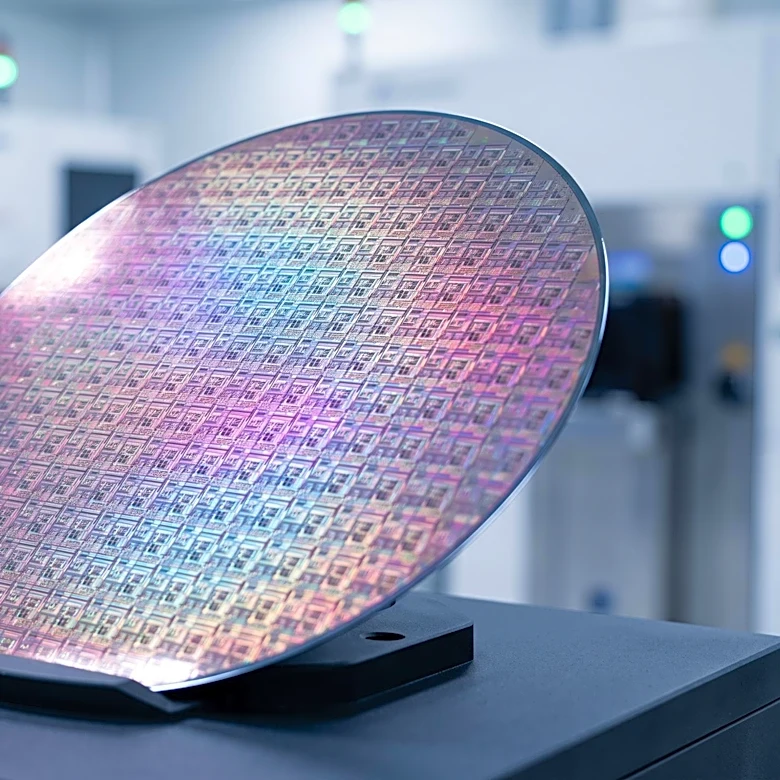
GlobalFoundries has announced a significant $2 billion, five-year manufacturing agreement with TSMC. This deal positions GlobalFoundries to supply silicon interposers for TSMC's CoWoS advanced AI-packaging technology. The production is slated to ramp
up in the first half of 2028 at GlobalFoundries' facility in Malta, New York. This agreement allows GlobalFoundries to expand its involvement in the AI semiconductor market by providing essential components for advanced packaging, rather than directly manufacturing leading-edge logic dies like GPUs. The company's focus will be on specialized fabrication that complements TSMC's core business, addressing the increasing demand for complex AI accelerators. This strategic move highlights the growing importance of advanced packaging in the semiconductor industry, as AI performance improvements increasingly rely on integrating multiple logic dies and enhancing memory bandwidth and die-to-die connectivity.
Why It's Important?
This agreement is crucial for the U.S. semiconductor supply chain, as it establishes a domestic source for silicon interposers, a critical component in advanced AI packaging. By securing this deal, GlobalFoundries gains substantial exposure to the rapidly expanding artificial intelligence and high-performance computing markets without directly competing in the highly capital-intensive leading-edge GPU fabrication. The annual average of $400 million from this agreement represents approximately 5.6% of GlobalFoundries' annualized quarterly revenue, indicating a financially meaningful impact. This partnership underscores a broader industry trend where advanced packaging is becoming as vital as transistor scaling for AI performance. It also demonstrates how U.S.-based manufacturing facilities are being leveraged to support global technology leaders like TSMC, enhancing the resilience and capabilities of the domestic semiconductor ecosystem. This move could also influence future investments in specialized manufacturing content within the U.S., fostering innovation and job creation in the high-tech sector.
What's Next?
The immediate next steps involve GlobalFoundries preparing its Malta, New York facility for the volume production ramp-up, which is expected to begin in the first half of 2028. This will entail capacity additions, process qualification, and ensuring production readiness. Investors will be closely watching for further disclosures regarding shipment schedules, pricing, and the overall production timeline to better assess the financial realization of this agreement. The long-term implications include GlobalFoundries potentially solidifying a recurring position within TSMC's advanced packaging supply chain, which could lead to sustained business growth across future product generations. This partnership may also encourage other semiconductor companies to explore similar collaborations to secure critical components and diversify their supply chains, particularly in the context of ongoing geopolitical considerations and the push for domestic manufacturing capabilities.
Beyond the Headlines
This agreement highlights a deeper shift in the semiconductor industry, where the value chain is becoming increasingly disaggregated. While the focus has traditionally been on the most advanced logic nodes, this deal emphasizes the growing importance of specialized manufacturing and advanced packaging technologies. It suggests that companies can carve out significant market share and profitability by focusing on specific, high-demand components within the broader semiconductor ecosystem, rather than attempting to compete across all segments. The ethical and strategic implications include strengthening the U.S.'s position in critical technology manufacturing, potentially reducing reliance on overseas production for key AI components. This could also lead to a more distributed and resilient global semiconductor supply chain, mitigating risks associated with geographical concentration. Furthermore, the investment in silicon interposers, while distinct from emerging glass substrate technologies, demonstrates a continuous evolution in packaging materials and architectures, indicating a dynamic and innovative future for semiconductor integration.