





What's Happening?
Alessandra Facchinetti's period as creative director for Gucci's women's ready-to-wear, following Tom Ford's departure, is being re-examined. Facchinetti, who previously spent four years as head of womenswear under Ford, was appointed as part of a triumvirate
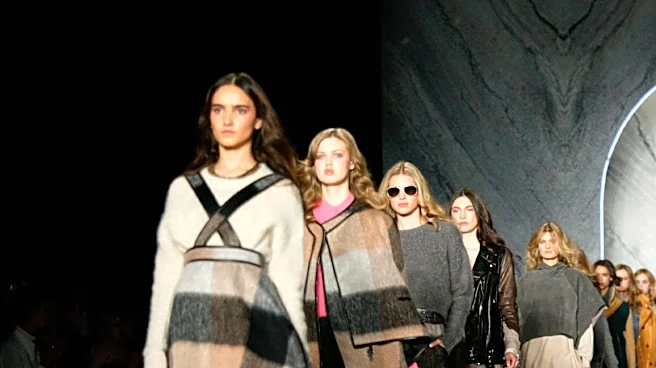
of designers in late 2003, alongside John Ray for menswear and Frida Giannini for accessories. This fragmented approach was adopted by PPR (now Kering) management to dilute the impact of Ford's significant legacy. Facchinetti's mandate was to introduce a softer, more romantic femininity to the Gucci woman, moving away from Ford's 'porno-chic' aesthetic. Her debut collection for Spring/Summer 2005 at Milan Fashion Week received mixed reviews. While it retained some of Gucci's established elements like crocodile belts and corsets, Facchinetti reconfigured their context with Asian-inspired references, such as fringed skirts and jewel-like jersey tops. Critics, including Cathy Horyn of The New York Times, noted a cautious approach and a perceived lack of a truly new vision. Her second and final collection for Fall/Winter 2005 also failed to fully impress, with some critics observing a sense of stagnation and an attempt to replicate Ford's past aesthetic without fresh creative incisiveness.
Why It's Important?
Facchinetti's brief and challenging tenure at Gucci highlights the immense pressure and scrutiny faced by designers stepping into the shoes of iconic predecessors in the luxury fashion industry. The post-Tom Ford era at Gucci was a critical juncture for the brand, as market analysts and the press widely believed the brand had become inseparable from Ford's aesthetic and charisma. The decision by PPR to fragment the creative direction underscored the difficulty of finding a single successor capable of immediately defining a new, successful identity for such a prominent house. This period demonstrates how crucial a clear and distinct creative vision is for a luxury brand's market perception and commercial success. The mixed reception to Facchinetti's collections, particularly the criticism regarding a lack of a truly new and autonomous vision, illustrates the high expectations for creative directors to not only maintain brand heritage but also to innovate and set new trends. Her experience serves as a case study in the complexities of brand transition and the challenges of evolving a strong brand identity while navigating the shadow of a highly successful former leader.
What's Next?
While Facchinetti's time at Gucci is in the past, the re-evaluation of her tenure contributes to the ongoing discourse within the fashion industry about creative leadership transitions and brand evolution. The industry continues to grapple with how luxury houses manage the departure of influential creative directors and the subsequent search for new talent capable of maintaining brand relevance and commercial success. Future discussions may draw parallels to similar transitions in other major fashion houses, examining strategies that have either succeeded or failed in navigating such pivotal moments. The emphasis on 'product sellability' that ultimately led to Frida Giannini unifying the creative direction suggests a continued industry focus on commercial viability alongside artistic vision. This historical perspective can inform how brands approach leadership changes, potentially leading to more integrated or carefully phased transitions to ensure continuity and a clear brand message. The fashion world will likely continue to analyze these historical shifts to better understand the dynamics of creative direction and market response.
Beyond the Headlines
Facchinetti's experience at Gucci delves into deeper implications concerning the nature of creative freedom versus commercial demands in the high-stakes world of luxury fashion. Her perceived struggle to fully break away from Tom Ford's established formula, despite her talent, raises questions about the extent to which a creative director can truly innovate when burdened by a predecessor's overwhelming legacy and the pressure to maintain sales. This situation highlights the tension between artistic expression and the commercial imperative to deliver profitable collections. Furthermore, the fragmentation of creative direction, intended to dilute the weight of Ford's legacy, ultimately proved to be a temporary solution, suggesting that a unified vision is often preferred for strong brand identity. The narrative also touches upon the subjective nature of fashion criticism and how media perception can significantly influence a designer's trajectory and a brand's direction. It underscores the constant balancing act designers face in honoring a brand's heritage while simultaneously pushing boundaries and defining a new aesthetic for contemporary audiences.