








What's Happening?
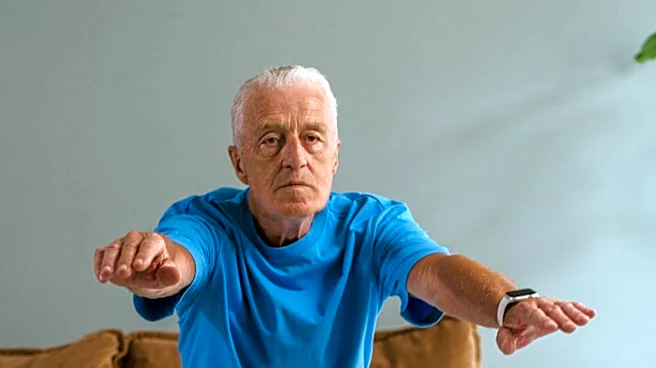
Bengie Santos, a 72-year-old former dancer and choreographer, has become a popular exercise instructor at the YMCA of Greater Seattle, where she leads classes for older adults. Her classes, which include a mix of music from Doris Day to hip-hop, attract
seniors in their 80s and 90s who come to stretch, dance, and lift weights. Santos' approach resonates with her peers, offering a sense of community and motivation that younger instructors may not provide. Her classes are not only about physical fitness but also about building social connections, as evidenced by participants like Sharon Ruff and Ann Kashiwa, who have found both health benefits and friendships through these sessions.
Why It's Important?
The involvement of older instructors like Santos in fitness programs highlights the importance of relatable role models in promoting healthy aging. As the U.S. population ages, maintaining physical activity becomes crucial for health and well-being. Older instructors can bridge the gap between exercise and enjoyment, making it more accessible and appealing to seniors. This approach can lead to improved physical health, reduced isolation, and enhanced mental well-being among older adults. The YMCA's inclusive hiring practices, which value the experience and relatability of older instructors, demonstrate a successful model for engaging seniors in physical activity.
What's Next?
The trend of employing older instructors in fitness programs is likely to continue as organizations recognize the unique benefits they bring. This could lead to more tailored fitness programs for seniors, focusing on both physical and social aspects. As the demand for such programs grows, other fitness centers may adopt similar practices, potentially expanding the reach and impact of senior fitness initiatives. Additionally, the success of these programs could influence public health policies to support and fund community-based fitness initiatives for older adults.
Beyond the Headlines
The success of older instructors in engaging seniors in fitness activities also touches on broader societal themes, such as ageism and the value of intergenerational learning. By showcasing the capabilities and contributions of older adults, these programs challenge stereotypes about aging and promote a more inclusive view of fitness and community participation. This shift could lead to greater societal recognition of the potential and value of older adults, influencing cultural attitudes and policies related to aging and health.