





What's Happening?
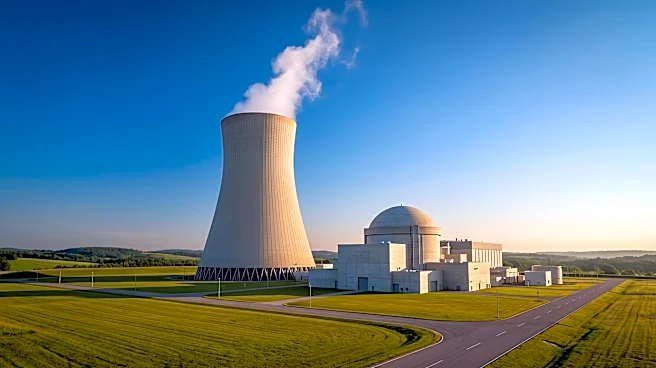
NextEra Energy has received a federal loan of up to $1.9 billion from the U.S. Department of Energy and approval from the Federal Energy Regulatory Commission (FERC) to reconnect the Duane Arnold nuclear plant in Iowa to the electric grid. The plant,
located near Cedar Rapids, was shut down in 2020 for economic reasons. NextEra Energy aims to restart the plant by early 2029 and has already secured a 25-year electricity supply agreement with Google to support its cloud-computing and AI infrastructure in Iowa. The FERC approval allows Duane Arnold to reconnect, and NextEra's filings indicate an earliest restart date in the fourth quarter of 2028. The plant is expected to add over 600 megawatts of capacity, capable of serving more than 400,000 homes, with some estimates suggesting nearly 500,000 homes.
Why It's Important?
The restart of the Duane Arnold nuclear plant is a significant development for U.S. energy policy and the broader electricity market. It represents a growing trend of bringing shuttered nuclear facilities back online, supported by federal financing, to enhance grid reliability and meet increasing electricity demand, particularly from energy-intensive sectors like data centers. The $1.9 billion federal loan underscores the government's commitment to nuclear power as a carbon-free energy source. The long-term power purchase agreement with Google highlights the increasing demand for stable, clean energy from major technology companies, influencing investment in baseload power generation. This project will add substantial capacity to the grid, contributing to energy security and potentially stabilizing electricity prices in the region. It also demonstrates the economic viability of nuclear plant restarts when coupled with federal support and guaranteed off-take agreements, potentially paving the way for similar projects nationwide.
What's Next?
NextEra Energy will proceed with the capital-intensive process of restarting the Duane Arnold plant, which includes significant spending, with up to $100 million planned for 2025 alone. Key steps involve ordering replacement transformers, which face supply constraints and could take about three years to deliver, and rebuilding facilities like cooling towers, the administration building, and the training center that were dismantled after the 2020 shutdown. The company will also need to secure remaining regulatory approvals from the Nuclear Regulatory Commission. The project's timeline, targeting late 2028 to early 2029 for electricity production, will be closely watched, especially given delays experienced by comparable nuclear restart projects. The success of Duane Arnold could influence future federal loan programs and private sector investments in nuclear energy, potentially accelerating the revitalization of the U.S. nuclear fleet to meet clean energy goals and growing industrial demand.
Beyond the Headlines
The Duane Arnold restart project reflects a deeper strategic shift in U.S. energy policy, moving towards a more diversified and resilient energy mix that includes nuclear power as a critical component for decarbonization and grid stability. The involvement of a major tech company like Google as a long-term buyer signals a growing corporate demand for reliable, carbon-free energy, which could drive further investment in nuclear and other clean baseload power sources. This trend challenges the previous narrative of nuclear power's decline due to economic factors and public perception. The project also highlights the complexities of restarting large-scale energy infrastructure, including supply chain challenges for specialized equipment and the need for extensive regulatory oversight. Ultimately, the success or challenges faced by Duane Arnold could serve as a blueprint for future energy transitions, influencing how the U.S. balances economic development, environmental sustainability, and energy security in the coming decades.