



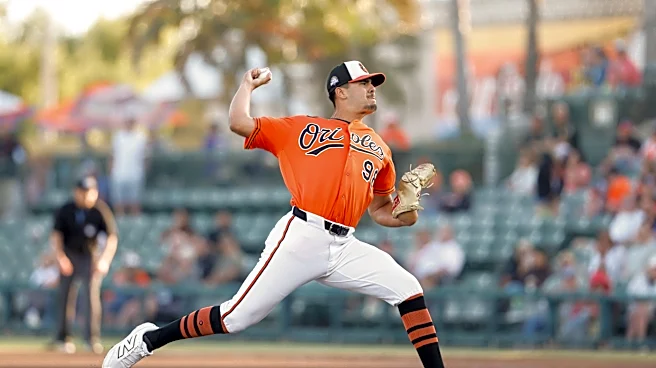
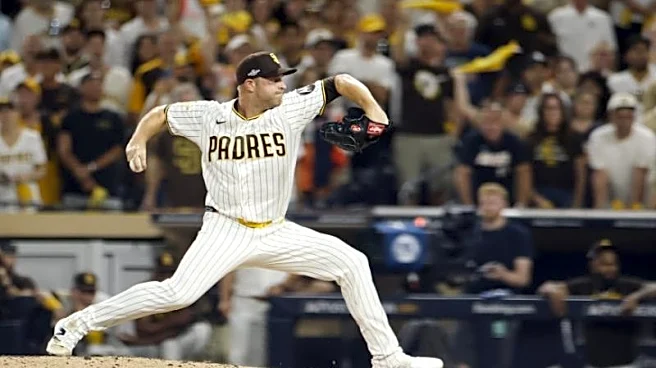

What's Happening?
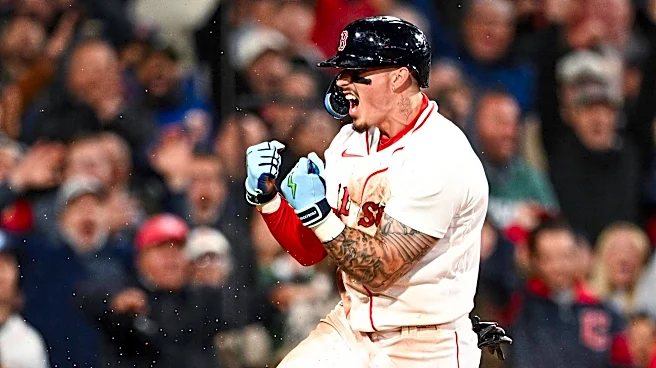
Boston Red Sox prospect Roman Anthony experienced a challenging season, playing only 55 games due to a hand/wrist injury. The 22-year-old, who had 242 plate appearances, recorded a .245 batting average, .339 on-base percentage, and .396 slugging percentage, along
with five home runs and a 108 OPS+. Despite the Red Sox's continued belief in Anthony as a potential franchise cornerstone, Bleacher Report's Joel Reuter has indicated that Anthony is not currently considered the best player under 25 on the team's roster. This assessment comes as Payton Tolle, another Red Sox prospect, distinguished himself as a frontline-caliber starter in his first full season in the majors. Tolle's performance included a 2.59 ERA, 1.08 WHIP, and 75 strikeouts over 59 innings in his final 10 starts. Anthony's injury also led to his removal from the Wild Card Series roster after aggravating the issue in Game 1. He is not expected to undergo surgery, with rest and patience being the prescribed recovery method.
Why It's Important?
The contrasting fortunes of Roman Anthony and Payton Tolle highlight the unpredictable nature of prospect development in professional baseball, particularly for a team like the Boston Red Sox that relies heavily on its farm system for future talent. Anthony's injury-plagued season underscores the significant impact health can have on a young player's trajectory and perceived value, potentially delaying his ascent to the major leagues and the fulfillment of his 'face of the franchise' potential. Conversely, Tolle's emergence as a 'frontline-caliber starter' provides a crucial boost to the Red Sox's pitching depth, a perennial area of focus for many MLB teams. The availability and consistent performance of players like Tolle can accelerate a team's rebuilding or competitive window, offering a more immediate return on investment compared to injured prospects. This situation also influences fan expectations and internal team strategies regarding player development, resource allocation, and future roster construction, as the organization must balance patience with injured talent against the proven performance of healthy prospects.
What's Next?
For Roman Anthony, the immediate future involves a period of rest and recovery for his hand/wrist injury, with the aim of being fully healthy for spring training. His performance in the upcoming season will be critical in re-establishing his position as a top prospect and validating the Red Sox's long-term faith in him. The team will closely monitor his progress and availability, as consistent playing time is essential for his development. For Payton Tolle, the focus will be on building upon his successful first full season and continuing to demonstrate his capabilities as a frontline starter. His strong performance could lead to a more prominent role within the Red Sox organization, potentially earning him a spot in the major league rotation sooner rather than later. The Red Sox will need to manage both players' development carefully, balancing the need for Anthony to regain form with Tolle's continued ascent, to maximize their potential contributions to the team's future success.
Beyond the Headlines
The narrative surrounding Roman Anthony and Payton Tolle extends beyond individual performance statistics, touching upon broader themes within professional sports, such as the psychological impact of injuries on young athletes and the strategic importance of organizational depth. For Anthony, overcoming a significant injury at a crucial stage of his development will test his resilience and mental fortitude, factors that often differentiate successful prospects from those who falter. The Red Sox's decision to prioritize rest over surgery for Anthony also reflects a growing understanding of long-term player health and career longevity in sports. Meanwhile, Tolle's rapid rise highlights the value of unexpected breakthroughs from within the farm system, which can provide cost-effective talent and alleviate pressure on the team's payroll. This dynamic underscores the continuous cycle of talent evaluation, development, and adaptation that defines successful sports franchises, where the ability to identify and nurture both highly touted prospects and late bloomers is paramount for sustained competitiveness.