
What's Happening?
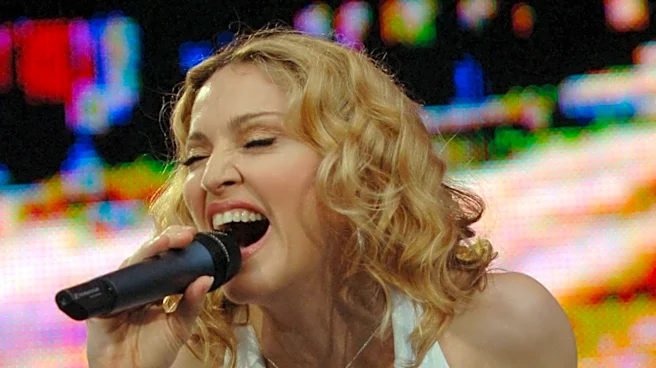
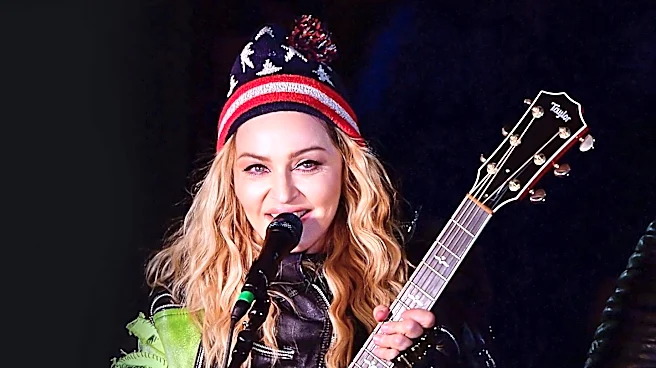
During her performance at Live Aid on July 13, 1985, Madonna responded assertively to a fan who shouted for her to remove her clothes. The incident, which occurred at Philadelphia's John F. Kennedy Stadium,
saw Madonna deliver a memorable comeback, refusing the demand and continuing her performance. This event is revisited in journalist Tomás Mier's upcoming book, 'Madonna: Into the Groove: An Intimate Portrait of the Queen of Pop,' which features previously unseen photographs by Ken Regan. Mier noted that Madonna's response was a defiant 'I'm not taking s— off today,' indicating her refusal to be dictated by the audience. This moment gained particular significance as it followed the publication of nude photographs of the singer in Playboy and Penthouse magazines earlier that year, which were taken in 1978 before her rise to international stardom. For her Live Aid appearance, Madonna opted for a more conservative outfit, including a bolero, a full blouse, and pants, a departure from her more revealing stage attire.
Why It's Important?
Madonna's reaction at Live Aid 1985 is significant as it demonstrates her early assertion of control over her public image and body, a theme that would define much of her career. At a time when her career was rapidly ascending with hits like 'Holiday' and 'Like a Virgin,' the publication of old nude photographs presented a challenge to her burgeoning stardom. Her decision to dress more conservatively for Live Aid and her direct refusal to the heckler can be interpreted as a strategic move to reclaim agency amidst public scrutiny. This act underscored her unwillingness to conform to external expectations, establishing a precedent for her future artistic and personal independence. The incident highlights the pressures female artists faced, and Madonna's response served as an early example of an artist pushing back against objectification and media sensationalism.
What's Next?
The upcoming release of Tomás Mier's book, 'Madonna: Into the Groove: An Intimate Portrait of the Queen of Pop,' scheduled for December 8, 2026, is expected to bring renewed attention to this period of Madonna's career. The book, featuring previously unseen photographs from February 1985, will offer deeper insights into her mindset and artistic development during a pivotal time. Discussions surrounding the book will likely reignite conversations about Madonna's influence on pop culture, her pioneering role in female empowerment within the music industry, and her consistent defiance of societal norms. Fans and critics alike will have the opportunity to re-evaluate her early career through a new lens, potentially leading to further analyses of her impact on subsequent generations of artists and broader cultural discussions about celebrity, image, and control.
Beyond the Headlines
The Live Aid incident and Madonna's response transcend a mere concert moment; they represent a critical juncture in the ongoing dialogue about female artists' autonomy and the objectification of women in media. Her defiance in 1985 foreshadowed later movements advocating for bodily autonomy and control over one's image. This event illustrates the complex relationship between celebrity, media, and public perception, particularly for women in the entertainment industry. Madonna's choice to dress conservatively and her verbal retort can be seen as an early form of resistance against the commodification of her image, setting a precedent for artists to challenge exploitative narratives. This historical moment contributes to a broader understanding of how female artists have navigated and subverted patriarchal expectations within the public sphere, influencing cultural norms and artistic expression for decades to come.