



What's Happening?
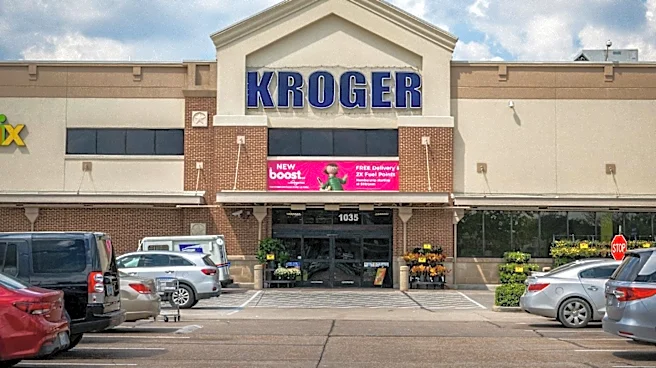
Berkshire Hathaway, led by Warren Buffett, has trimmed its holding in Kroger, one of America's largest supermarket operators. According to its latest Q3 13F filing, Berkshire Hathaway cut its Kroger stake by approximately 4 million shares, reducing its total
holding from 39 million to 35 million shares. This adjustment represents about a 10% reduction in its position, which is now valued at $2.06 billion. Kroger, founded in 1883, operates roughly 2,800 stores across 35 states, serving over 11 million customers daily. The company's offerings extend beyond groceries to include household essentials, prescriptions, fuel, and manufactured food products. This move follows a period where Kroger's stock has seen significant gains, with a 14.41% increase year-to-date and a 75.89% return over the past three years, trading at $69.79 on November 18.
Why It's Important?
This reduction by Berkshire Hathaway, a prominent investment firm known for its long-term value investing approach, signals a potential strategic adjustment in its portfolio. While a 10% trim is not a complete exit, it suggests that Berkshire Hathaway may be taking profits after Kroger's strong multi-year performance. This action could influence other investors who often look to Berkshire Hathaway's filings for market insights. For Kroger, while the reduction is notable, Berkshire Hathaway remains a very large shareholder, indicating continued confidence in the company's underlying business. However, the grocery sector faces challenges, including intense competition and pricing pressures, as evidenced by Kroger's modest identical sales growth of 0.2% in the second quarter. The decision to trim the stake might reflect a cautious outlook on the immediate growth prospects within the grocery industry.
What's Next?
While Berkshire Hathaway's 13F filings do not disclose the reasons behind their investment decisions, the move suggests a strategy of securing profits from a successful investment. Investors will likely monitor future filings to see if Berkshire Hathaway continues to adjust its position in Kroger or other retail holdings. Kroger, meanwhile, is planning to open 110 new stores, indicating an ongoing expansion strategy despite market challenges. The company will need to navigate a competitive landscape and evolving consumer behaviors, especially concerning pricing and discount strategies. The broader market will observe how Kroger's stock performs following this news and how other institutional investors react to Berkshire Hathaway's portfolio adjustment.
Beyond the Headlines
Berkshire Hathaway's partial divestment from Kroger highlights a fundamental principle of investing: knowing when to take profits. This move, while seemingly minor, underscores the disciplined approach often employed by seasoned investors like Warren Buffett, who prioritize long-term value and risk management. It also subtly points to the inherent difficulties in the grocery business, characterized by thin margins and constant pressure to innovate and adapt to consumer demands. The decision to trim a stake in a well-performing company like Kroger, rather than making a dramatic exit, reflects a nuanced understanding of market cycles and the importance of maintaining a balanced portfolio. This action could serve as a case study for individual and institutional investors on strategic portfolio rebalancing in response to market performance.