




What's Happening?
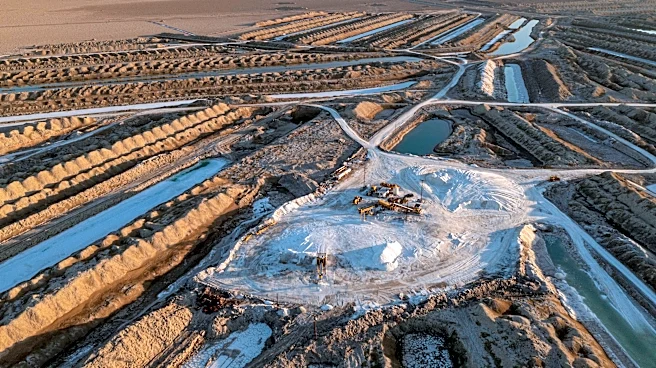
Glencore, a major mining and commodity trading company, is increasing its commitment to the lithium supply chain by investing in the Manono West lithium permits. The company has agreed to invest $1 million into Sandstone Worldwide as part of Lithium Africa’s
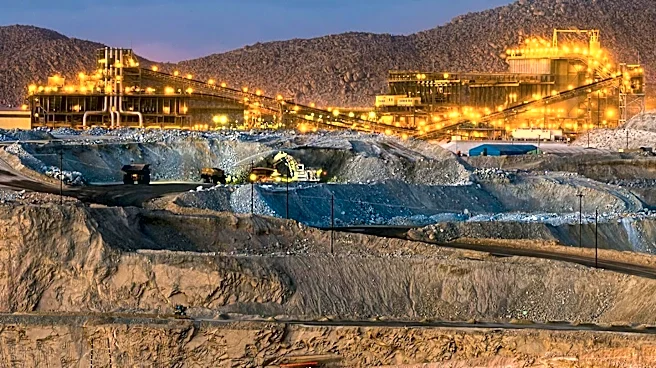
planned acquisition. This deal also includes a $4 million debt transfer from Tantalex to Sandstone and a 1% gross revenue royalty for Glencore. This move provides investors with a clearer understanding of Glencore's strategic positioning in the rapidly evolving battery metals market. The investment comes amidst mixed short-term share price performance for Glencore, with recent gains offset by longer-term declines over 30 and 90 days. However, the company has shown positive returns over a year-to-date, one-year, three-year, and five-year horizon, suggesting long-term investor confidence. Glencore is also planning to significantly increase its copper production from approximately 0.85 Mt to 1 Mt by 2028, and further to 1.6 Mt by 2035, supported by various brownfield projects. Concurrently, the company aims to reduce its long-term copper C1 cash costs from around $2.77 per pound in 2026 to about $1.18 per pound in 2028 and $1.08 per pound in 2029.
Why It's Important?
Glencore's investment in the Manono West lithium project is significant as it underscores the growing importance of battery metals in the global economy, particularly for the electric vehicle and renewable energy sectors. By securing a stake in lithium supply, Glencore is diversifying its portfolio beyond traditional commodities like copper and coal, positioning itself for future growth in high-demand markets. This strategic pivot could enhance the company's long-term revenue and profitability, especially as global demand for lithium is projected to surge. The planned increase in copper production, coupled with a targeted reduction in production costs, further strengthens Glencore's industrial base and aims to improve net margins. This dual strategy of expanding core metal production while investing in future-oriented commodities like lithium could make Glencore a more resilient and attractive investment. The move also signals a broader trend among major mining companies to adapt to the energy transition by securing critical raw materials for green technologies.
What's Next?
Following this investment, Glencore will likely focus on integrating the Manono West lithium project into its broader operational strategy and supply chain. The company's commitment to increasing copper production and reducing costs will continue, with ongoing development of brownfield projects and implementation of cost-cutting programs. Investors will be closely watching how Glencore's lithium ventures perform and how they contribute to the company's overall financial results. The market will also assess whether Glencore's valuation, currently considered by some analysts to be undervalued, will adjust as its battery metals strategy unfolds. Potential future steps could include further investments in other critical battery minerals or strategic partnerships to solidify its position in the electric vehicle supply chain. The success of these initiatives will depend on global commodity prices, geopolitical stability in mining regions, and the pace of the global energy transition.
Beyond the Headlines
Glencore's move into lithium at Manono West highlights the complex interplay between traditional mining operations and the demands of the green economy. This investment is not just about securing a new commodity; it reflects a broader strategic shift within the mining industry to align with global decarbonization efforts. The ethical and environmental implications of lithium extraction, particularly in regions like Africa, will be a critical aspect to monitor. Ensuring responsible mining practices, community engagement, and sustainable resource management will be paramount for Glencore to maintain its social license to operate. Furthermore, the increasing competition for critical minerals could lead to geopolitical tensions and supply chain vulnerabilities, making strategic investments like this crucial for national economic security in countries reliant on these materials. Glencore's long-term success will depend not only on market dynamics but also on its ability to navigate these complex ethical, environmental, and geopolitical landscapes.