



What's Happening?
Morgan Stanley's prime brokerage data indicates that U.S. equity long/short hedge funds have significantly reduced their net exposure to just 41%, marking the lowest level in a year and placing it in the sixth percentile of readings since 2010. This defensive
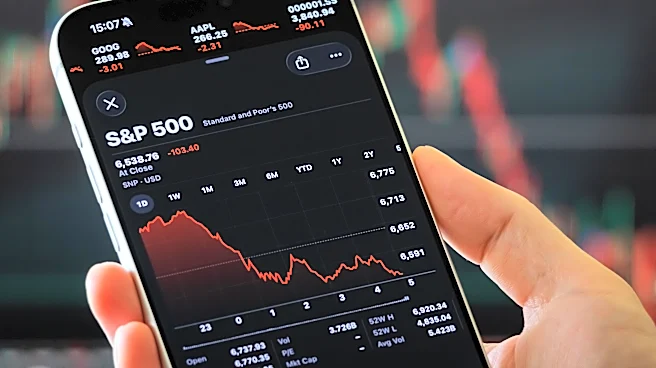
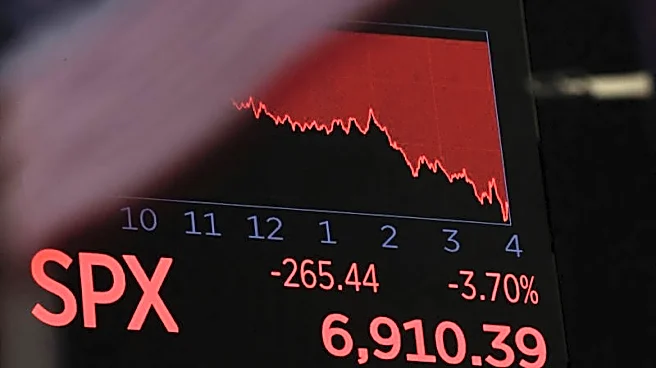
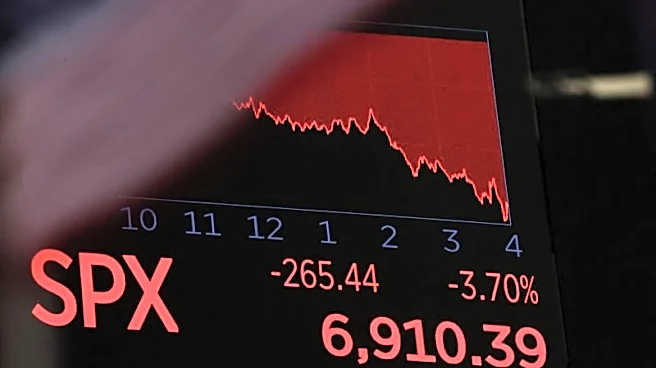
positioning by professional investors follows a technology-led market selloff and suggests they are anticipating an earnings slowdown that Wall Street analysts have not yet factored into their forecasts. Historically, hedge fund exposure and corporate earnings growth have shown a 58% correlation since 2016, making the current decline particularly notable. The bank estimates that current stock prices reflect an approximate 6% decline in corporate earnings for 2027, a stark contrast to Morgan Stanley's own analyst forecast of 14% growth and the broader Wall Street consensus of 17% growth. This disconnect highlights a significant divergence in outlook between hedge funds and market analysts regarding the future of U.S. corporate profits.
Why It's Important?
This divergence in outlook between hedge funds and Wall Street analysts carries significant implications for the U.S. stock market and broader economic sentiment. Hedge funds, often seen as sophisticated investors, are signaling caution, suggesting they foresee a weaker corporate earnings environment than what is currently priced into analyst expectations. This defensive stance could indicate a potential for increased market volatility or a broader market correction if their predictions materialize. For S&P 500 investors, the critical question revolves around whether corporate earnings growth will align with the optimistic projections of Wall Street or the more pessimistic outlook reflected in current stock prices and hedge fund positioning. A sustained period of lower earnings could impact corporate valuations, investment decisions, and overall economic growth, potentially leading to a re-evaluation of investment strategies across various sectors.
What's Next?
Morgan Stanley's chief U.S. equity strategist, Mike Wilson, views the current pessimism and depressed positioning as a potential opportunity for a market recovery, provided corporate profits demonstrate resilience. However, a key risk remains that analysts may eventually revise their earnings forecasts downwards, thereby validating the defensive strategies adopted by hedge funds. Investors will be closely watching upcoming corporate earnings reports and analyst revisions to gauge the accuracy of either perspective. If earnings prove more robust than hedge funds anticipate, a market rebound could occur as investors re-enter the market. Conversely, if earnings falter, further market declines could be expected, prompting a broader reassessment of economic forecasts and investment strategies. The interplay between actual corporate performance and market expectations will dictate the near-term trajectory of U.S. equities.
Beyond the Headlines
The current situation highlights a fundamental tension in financial markets: the battle between forward-looking investor sentiment and backward-looking analyst projections. Hedge funds, with their ability to quickly adjust positions, often act as early indicators of shifts in market sentiment, reflecting a more immediate reaction to perceived risks. The significant reduction in net exposure suggests a deep-seated concern about underlying economic fundamentals or potential headwinds not yet fully acknowledged by consensus forecasts. This could also reflect a broader trend of risk aversion in the face of economic uncertainties, such as inflation, interest rate policies, or geopolitical events. The outcome of this divergence will not only impact stock market performance but also influence corporate investment decisions, hiring plans, and consumer confidence, potentially shaping the broader economic narrative for the coming years.