





What's Happening?
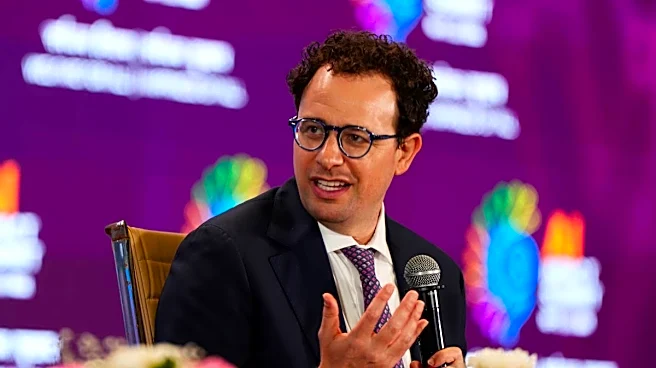
Steve Eisman, the 'Big Short' investor, has issued a warning that the artificial intelligence (AI) trade's heavy reliance on two private companies, OpenAI and Anthropic, presents a significant market risk. Eisman stated that the entire AI ecosystem, from
chip sales by Nvidia to cloud revenue for hyperscalers, is dependent on the future health and success of these two firms. He expressed particular concern about OpenAI, describing it as the 'weak sister' due to cooled income growth and rapidly mounting expenses, with income up nearly $1 billion sequentially but costs soaring by approximately $3 billion in the same period. Eisman suggested that if OpenAI were to fail, the U.S. economy could enter an immediate recession, and the market could experience a massive correction. He emphasized that he was not predicting such an outcome but views this concentration as the most significant risk to markets today. He also noted that corporate spending on AI, particularly 'token maxing,' has ended, making the second half of the year a crucial test for both companies.
Why It's Important?
The concentration of the AI trade on OpenAI and Anthropic is critically important because it introduces a single point of failure risk to a rapidly growing and economically significant sector. The potential failure of one of these foundational AI companies, particularly OpenAI, could trigger a cascading effect across the entire technology ecosystem, impacting chip manufacturers like Nvidia and cloud service providers. This scenario could lead to a significant market correction and, as Eisman warns, potentially an immediate recession in the U.S. economy. The financial health of these companies, especially OpenAI's widening gap between income and expenses, highlights the immense capital investment required for AI development and the speculative nature of some current valuations. For investors, this concentration risk means that the broader AI boom, which has fueled significant market gains, is more fragile than it might appear. For the U.S. economy, a disruption in the AI sector could undermine technological leadership and economic growth, given the increasing integration of AI across industries.
What's Next?
The financial performance of OpenAI and Anthropic in the coming months will be closely scrutinized, especially as corporate AI spending becomes more disciplined. Eisman's focus on the second half of the year as a crucial test for Anthropic's revenue story suggests that investors will be looking for signs of sustainable growth and improved profitability from these companies. Any slowdown in corporate AI spending could lead to a sell-off across the broader tech sector. The potential for Anthropic's eventual IPO could provide a more transparent view of its financial health and growth trajectory. Policymakers and regulators may also begin to consider the systemic risks posed by such high concentration in critical emerging technologies, potentially leading to discussions about antitrust measures or diversification strategies. Investors will need to carefully evaluate their exposure to the AI sector, considering the potential for significant volatility and the importance of these two companies to the overall market's stability.
Beyond the Headlines
The warning about the concentrated risk in the AI trade delves into deeper implications beyond immediate market fluctuations. It highlights the inherent fragility of innovation-driven economic booms when they are heavily reliant on a few key players. This situation raises questions about the long-term sustainability of the current AI investment landscape and whether the rapid pace of technological advancement is outstripping the development of robust, diversified market structures. Ethically, the immense power and influence concentrated in OpenAI and Anthropic could lead to concerns about market dominance, data control, and the potential for a few entities to dictate the future direction of AI development. Culturally, it reflects a broader societal trend of rapid technological adoption often outpacing critical assessment of systemic risks. The potential for a 'tech sell-off' or even a recession due to the failure of a single AI company underscores the increasing interconnectedness of technology and the macroeconomy, suggesting that future economic stability may depend not just on traditional financial indicators but also on the health and diversification of critical tech sectors. This scenario could prompt a re-evaluation of how emerging technologies are funded, regulated, and integrated into the broader economic fabric.