








What's Happening?
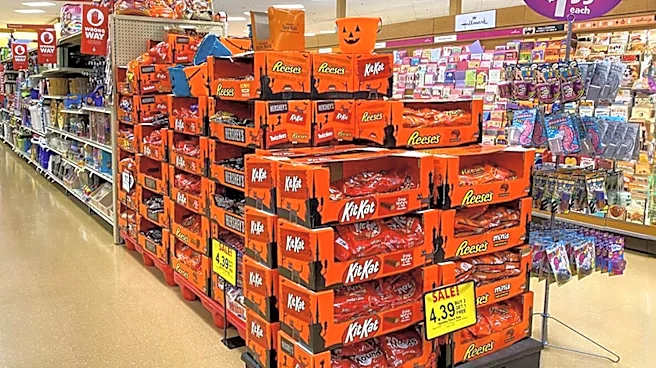
Instacart's latest report on Halloween trends indicates that Reese's Peanut Butter Cups are the number one selling candy by ounces in Tennessee, mirroring a national trend where Reese's is the top seller in 40 out of 51 states and Washington, D.C. The
report, which analyzes consumer purchasing habits throughout October, also highlights regional candy preferences and costume choices. For instance, Montana shows an exceptionally high preference for HI-CHEW, purchasing it at 616% above the national average. Rhode Island is unique in that Sour Patch Kids outsells both Reese's and Peanut M&M's. Western states, including Utah, Idaho, and Alaska, lead in overall candy purchases, while the Northeast exhibits the most restraint. Among food-related costumes, the banana was the most popular choice for adults, coinciding with bananas being the top-selling item on Instacart.
Why It's Important?
This Instacart report offers valuable insights into consumer behavior and regional market dynamics within the U.S. confectionery and costume industries during the Halloween season. For candy manufacturers and retailers, understanding these preferences can inform production, marketing, and distribution strategies, potentially leading to increased sales and reduced waste. The data on regional quirks, such as Montana's preference for HI-CHEW or Rhode Island's for Sour Patch Kids, underscores the importance of localized marketing efforts rather than a one-size-fits-all approach. Furthermore, the popularity of the banana costume and its correlation with high banana sales on Instacart illustrates how cultural trends and product availability can influence consumer choices, providing a unique case study for market researchers and businesses in the e-commerce sector. This information can help businesses optimize inventory and promotional campaigns for seasonal events.
What's Next?
Moving forward, candy manufacturers and retailers will likely leverage these insights to refine their strategies for future Halloween seasons. This could involve tailoring product assortments to specific regional tastes, increasing stock of top-performing candies like Reese's in key markets, and developing targeted marketing campaigns that resonate with local preferences. The observed trends in costume choices, particularly the popularity of food-related costumes, might also influence costume designers and retailers to expand their offerings in this niche. Instacart and similar delivery services may use this data to optimize their inventory management and delivery logistics during peak seasonal demand, ensuring popular items are readily available. Additionally, the report could spark further research into the cultural and demographic factors driving these distinct regional consumption patterns.
Beyond the Headlines
Beyond immediate commercial implications, the Instacart Halloween report subtly reflects broader cultural and economic patterns. The divergence in candy consumption between Western and Northeastern states could hint at differing regional attitudes towards indulgence, health consciousness, or even disposable income during holiday periods. The strong brand loyalty to certain candies, like Reese's, highlights the enduring power of established brands in the U.S. market. The report also touches upon the evolving role of e-commerce platforms like Instacart in shaping consumer habits, demonstrating their capacity to not only fulfill demand but also to generate data that reveals nuanced aspects of American culture and consumer psychology. This data can be a powerful tool for understanding the subtle shifts in national and regional identities through the lens of everyday purchases.