






What's Happening?
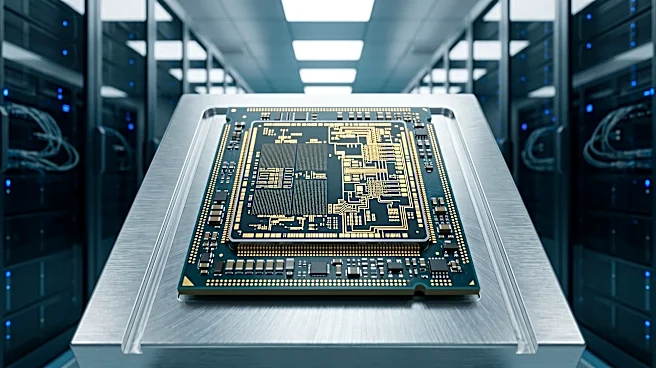
The KraneShares SSE STAR Market 50 Index ETF (KSTR) provides investors with a concentrated exposure to China's 'hard tech' sector, specifically focusing on semiconductor and semiconductor-equipment companies listed on the Shanghai Stock Exchange's STAR Market.
KSTR holds approximately 50 securities, with significant allocations to companies like Cambricon Technologies, Montage Technology, Advanced Micro-Fabrication Equipment, Hygon Information Technology, and VeriSilicon Microelectronics. Information technology constitutes about 76% of its assets. This ETF is positioned as a higher-beta, higher-volatility investment compared to broader Chinese technology ETFs like the Invesco China Technology ETF (CQQQ), reflecting its specialized focus on China's chip self-sufficiency efforts and the inherent risks and potential rewards of this thematic investment.
Why It's Important?
KSTR's focus on China's semiconductor sector is highly relevant given Beijing's strategic push for technological self-reliance, particularly in response to ongoing export-control tensions with the United States. For U.S. investors, KSTR offers a direct way to participate in China's efforts to build a domestic semiconductor industry, which could have long-term implications for global technology supply chains and competition. The concentration in 'hard tech' names means that KSTR's performance is heavily tied to the success of China's indigenous chip development and manufacturing. While this offers potential for significant gains if China achieves its self-sufficiency goals, it also carries higher risks due to sector-specific volatility, geopolitical factors, and the nascent stage of some of these companies. This ETF highlights the investment opportunities arising from the U.S.-China technology rivalry.
What's Next?
The performance of KSTR will largely depend on the continued policy support from the Chinese government for domestic semiconductor production and the ability of its constituent companies to innovate and scale. Future developments in U.S.-China trade relations and export control policies will also significantly impact the sector. If China successfully reduces its reliance on foreign chips, KSTR could see substantial growth. However, if technological hurdles, market adoption challenges, or intensified geopolitical pressures arise, the ETF could experience increased volatility. Investors will need to closely monitor China's progress in chip manufacturing, the competitive landscape, and any shifts in government policy or international trade agreements to assess KSTR's future trajectory.
Beyond the Headlines
KSTR's existence and its investment thesis underscore a fundamental shift in the global technology landscape: the emergence of distinct, national technology ecosystems. This ETF is not just a financial product; it's a reflection of China's strategic imperative to decouple from foreign technology dependencies. The 'hard tech' focus signifies a long-term commitment to foundational technologies, moving beyond internet platforms to core hardware. This trend has profound implications for global innovation, potentially leading to parallel development paths and differing technological standards. For U.S. stakeholders, KSTR represents a tangible measure of China's progress in a critical sector, offering insights into the effectiveness of U.S. policies and the competitive challenges ahead. The ethical considerations revolve around investing in companies that are part of a state-backed effort to counter U.S. technological dominance, raising questions about the broader geopolitical alignment of investment portfolios.