


What's Happening?
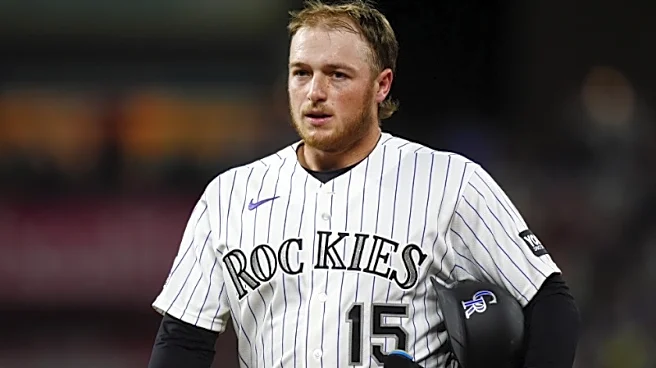
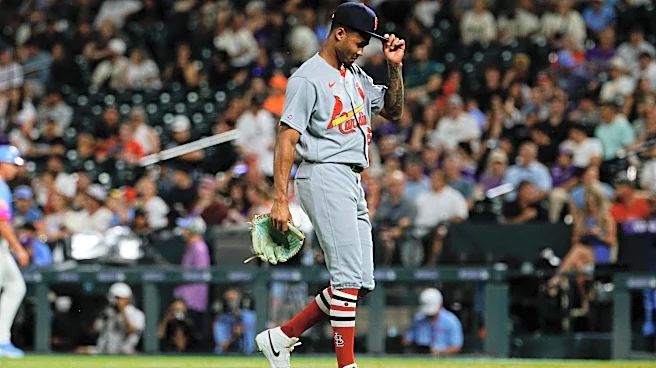
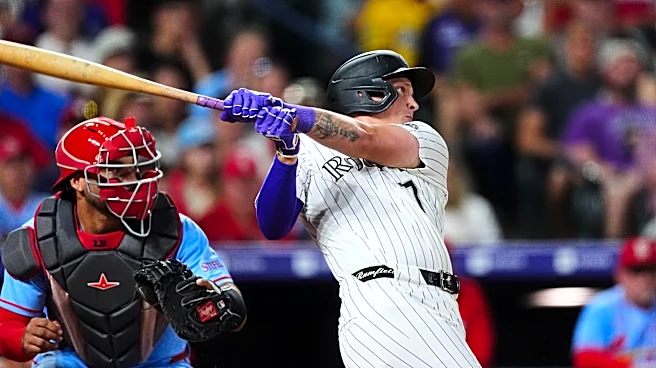
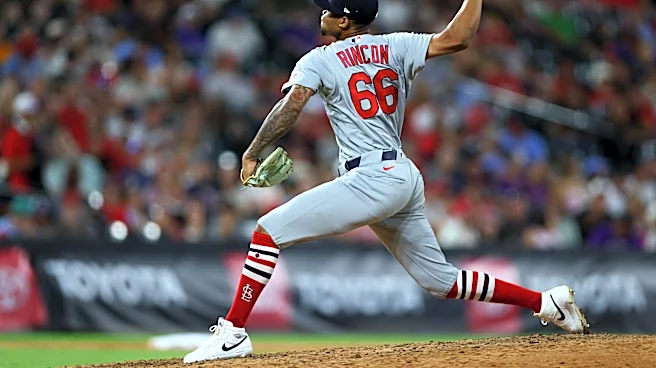
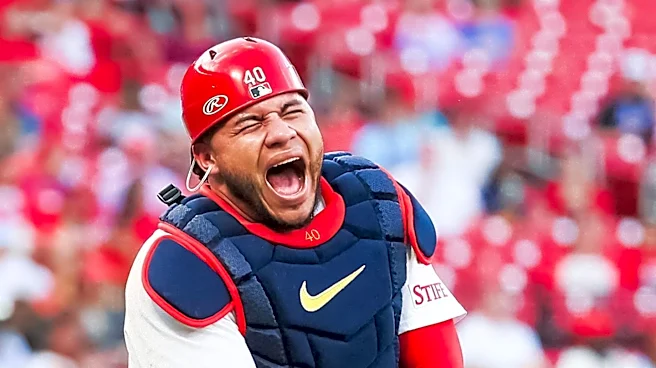
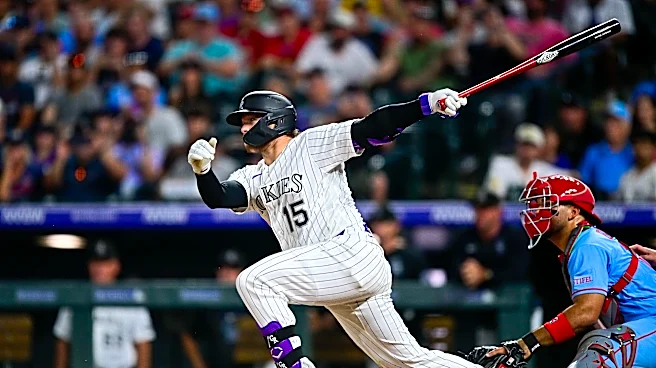
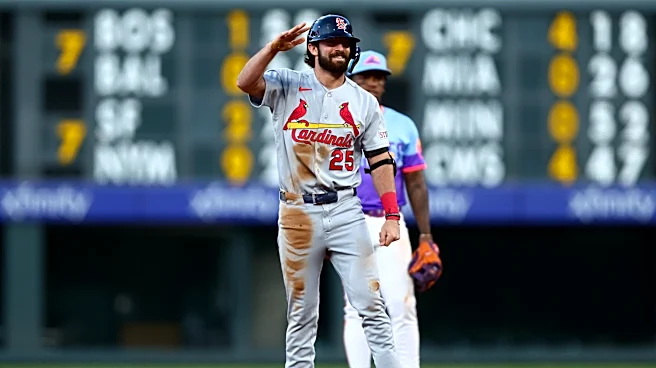
Players from the St. Louis Cardinals and Colorado Rockies tilted their caps during a game on Saturday night in apparent protest against umpire Doug Eddings. This action followed an incident the previous day when Eddings instructed Cardinals rookie pitcher
Hancel Rincon to straighten his hat, which was worn with the brim pointing to the left. The umpire's instruction led to an argument with St. Louis manager Oliver Marmol, resulting in Marmol's ejection from the game. Most Cardinals players tilted their hats during pregame warmups and continued to do so in the dugout, with some even tilting their batting helmets after reaching base. Several Colorado players also participated by wearing their caps to the side. Rincon, a 24-year-old from the Dominican Republic, made his major league debut during the game. Eddings reportedly apologized to Rincon on Saturday, which Rincon accepted through an interpreter. Eddings stated he confronted Rincon after a Colorado hitter complained, though the hitter in question denied making such a complaint.
Why It's Important?
This incident highlights a tension between player expression and official rules or interpretations within professional sports. The collective action by players from both teams to tilt their caps signifies a unified stance against what they perceived as an arbitrary or 'power-hungry' decision by the umpire. Such displays of solidarity can influence how rules are enforced and interpreted in the future, potentially leading to discussions about player individuality versus uniform standards. Manager Oliver Marmol's ejection and his subsequent comments about the umpire's conduct underscore concerns about the discretion exercised by game officials. The situation also brings attention to the experiences of rookie players, particularly those from diverse backgrounds, and how they navigate the unwritten rules and expectations of the league. This event could spark broader conversations within Major League Baseball regarding player conduct, umpire authority, and the balance between tradition and personal expression.
What's Next?
While umpire Doug Eddings has apologized to pitcher Hancel Rincon, the broader implications of this protest may continue to unfold. Major League Baseball officials might review the incident, potentially leading to clarifications on uniform policies or umpire conduct guidelines. Players and managers may continue to express their views on such matters, possibly through player associations or direct communication with the league. The incident could also influence how umpires approach similar situations in the future, potentially leading to more leniency or clearer communication regarding player attire. The solidarity shown by players from both teams suggests a potential for continued collective action if similar issues arise, reinforcing the idea that players are willing to stand up for each other against perceived injustices or overreach by officials. The focus will likely shift to how the league addresses the underlying concerns raised by the players' protest.
Beyond the Headlines
The cap-tilting protest transcends a simple uniform infraction, touching upon themes of cultural expression and individual identity within a highly regulated professional environment. Rincon, being a rookie from the Dominican Republic, brings an element of cultural context to how he wears his cap, which may differ from traditional American baseball norms. The comparison made by Manager Marmol to other prominent pitchers who have worn their hats tilted, such as Dontrelle Willis, CC Sabathia, and Pedro Strop, suggests a double standard or an inconsistent application of rules. This incident could spark a deeper conversation about the unwritten rules of baseball, the role of tradition, and how the league accommodates diverse expressions of identity among its players. It also highlights the power dynamics between players, managers, and umpires, and how these interactions can sometimes overshadow the game itself, leading to broader discussions about respect and authority in professional sports.