

What's Happening?
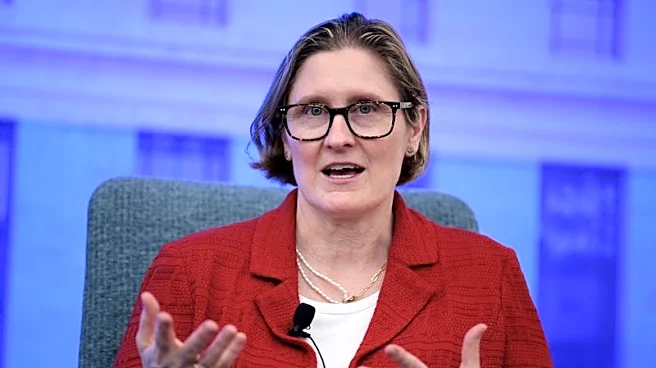
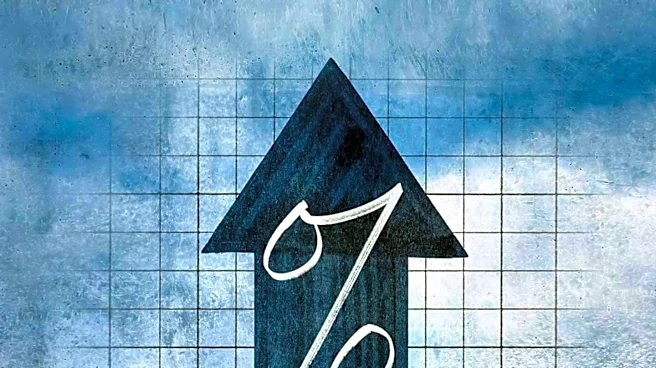
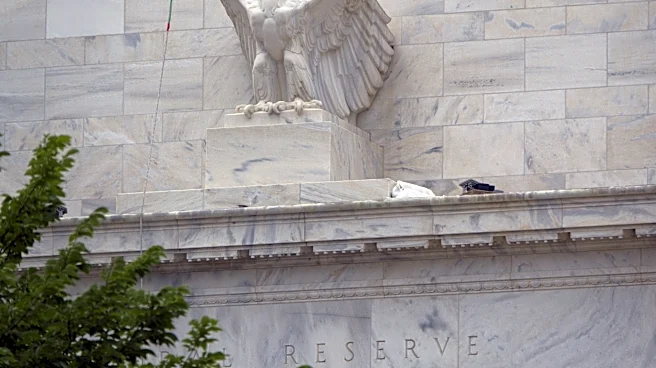
Federal Reserve Governor Lisa Cook has expressed skepticism regarding the effectiveness of September's quarter-percentage-point interest rate increase in curbing persistently high inflation. Speaking at an annual conference hosted by the Central Bank
of Chile, Cook warned that the central bank risks falling behind the curve if it delays further monetary policy tightening. She highlighted that inflation has remained above the central bank's 2% target for 67 months and that the labor market remains solid. Cook's remarks provide her first public explanation for dissenting from the Federal Open Market Committee's decision last month. She noted that a series of economic shocks, including tariffs and rising energy costs, have contributed to inflation's trajectory, stating that the current economic climate does not afford the luxury of patience.
Why It's Important?
Governor Cook's concerns underscore a critical debate within the Federal Reserve regarding the appropriate pace and magnitude of interest rate adjustments. Her warning that delaying additional rate increases could necessitate more aggressive actions later carries significant implications for American households and the financial system. Larger and more rapid rate hikes could increase stress on financial markets and potentially lead to more damaging economic effects. This perspective suggests that the Fed might need to adopt a more hawkish stance to effectively manage inflation, which could impact borrowing costs for consumers and businesses, investment decisions, and overall economic growth. The ongoing discussion among FOMC participants about the need for decisive action reflects the urgency of bringing inflation under control.
What's Next?
The Federal Reserve will likely continue to monitor economic indicators closely, particularly inflation data and labor market trends, to inform future monetary policy decisions. Governor Cook's comments, alongside those from other Fed officials who favor additional rate increases, suggest that further tightening of monetary policy is a strong possibility. Some officials have even proposed a half-percentage-point increase in the federal funds rate, double the typical increment. The Federal Open Market Committee will need to weigh the risks of acting too slowly against the potential for over-tightening and triggering an economic slowdown. Future meetings and public statements from Fed officials will provide further insight into the central bank's strategy for addressing persistent inflation.
Beyond the Headlines
The debate within the Federal Reserve, as highlighted by Governor Cook, extends beyond immediate interest rate decisions to the broader philosophy of monetary policy in a volatile economic environment. The challenge lies in navigating a complex landscape where various economic shocks can quickly alter inflationary pressures. The potential for the Fed to 'fall behind the curve' raises questions about the central bank's credibility and its ability to maintain price stability without unduly impacting economic growth. This situation could lead to a re-evaluation of the Fed's reaction function and its communication strategy to manage market expectations and public confidence in its ability to achieve its dual mandate of maximum employment and price stability.