

What's Happening?
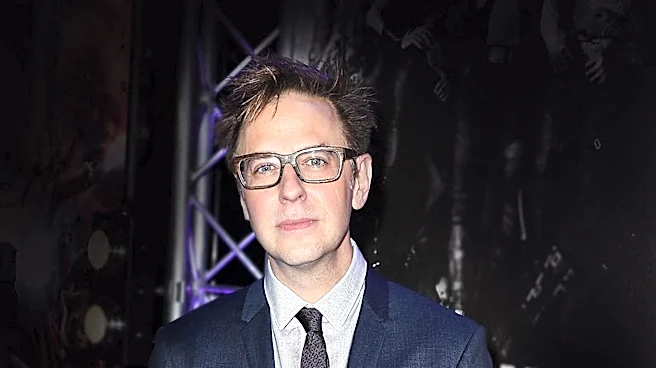
James Gunn, co-head of DC Studios and director of 'Man of Tomorrow,' has stated that the DC Universe (DCU) is an alternate universe and not a direct replication of DC Comics. This clarification came during an exchange on Threads, where Gunn addressed
how characters like Maxwell Lord, portrayed by Sean Gunn, will be interpreted in the DCU. He emphasized that the DCU's approach allows for creative departures from the comic book source material, reflecting his own vision rather than a one-to-one adaptation. Gunn expressed his preference for the original, more complex version of Maxwell Lord from 'Justice League International,' indicating that the DCU's portrayal will align with this nuanced characterization rather than later, less subtle interpretations. This stance underscores the creative freedom being exercised in developing the new interconnected superhero films and shows under DC Studios.
Why It's Important?
This declaration from James Gunn is significant for several reasons, primarily for setting audience expectations and defining the creative direction of the DCU. By positioning the DCU as an 'alternate universe,' Gunn signals that fans should anticipate new interpretations of beloved characters and storylines, rather than strict adherence to established comic book canon. This approach could lead to more innovative storytelling and character development, potentially attracting new audiences while also challenging long-time fans to embrace fresh perspectives. For the entertainment industry, this strategy highlights a growing trend of adapting intellectual property with creative license, aiming to revitalize franchises and avoid direct comparisons to previous iterations. It also impacts how actors and creators approach their roles, as they are given more room to shape characters without being entirely bound by decades of comic book history. The success of this strategy could influence future adaptations across the superhero genre, demonstrating the viability of alternate universe narratives.
What's Next?
The DCU is expected to continue its development with upcoming projects like 'Man of Tomorrow,' where these new interpretations will be showcased. Fans can anticipate further discussions and clarifications from James Gunn on social media platforms as more details about the DCU's characters and storylines emerge. The reception of these new portrayals, such as Sean Gunn's Maxwell Lord, will be crucial in shaping public perception and the overall trajectory of the DCU. The creative team will likely monitor fan feedback closely, balancing innovation with the expectations of a dedicated fanbase. Future announcements regarding casting, plot details, and character arcs will likely reinforce the 'alternate universe' concept, providing more examples of how the DCU diverges from its comic book origins. This ongoing dialogue and the unfolding of new narratives will define the identity of the DCU in the coming years.
Beyond the Headlines
The concept of the DCU as an 'alternate universe' carries deeper implications for the relationship between source material and adaptation in popular culture. It challenges the notion that adaptations must be faithful reproductions, instead advocating for creative evolution. This approach can foster a more dynamic and less constrained creative environment, allowing filmmakers to explore themes and character arcs that might not fit within established comic book continuity. Ethically, it raises questions about the balance between artistic vision and fan expectations, particularly for properties with long and complex histories. Culturally, it reflects a broader trend in media where reboots and reinterpretations are common, often seeking to update narratives for contemporary audiences. The long-term success of this strategy could redefine how intellectual properties are adapted, moving towards a model where the 'spirit' of the source material is maintained, but the specifics are open to significant reinterpretation, potentially leading to a richer and more diverse storytelling landscape.