



What's Happening?
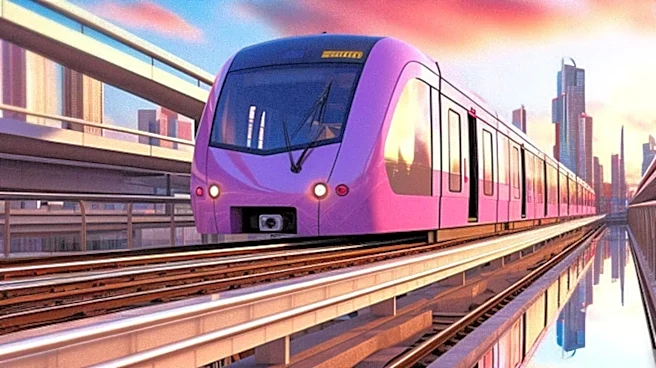
Saudi Arabia's Royal Commission for Riyadh City (RCRC) has commenced construction on the Expo Station, a new addition to the Riyadh Metro system, and unveiled its architectural design. This station is designed to be a solar-powered hub, connecting airport
arrivals directly to the Expo 2030 site. The project aims to accommodate up to 19,000 commuters per hour and will cover an area of approximately 70,000 square meters. The architectural design draws inspiration from Riyadh's natural environment, featuring a 134-meter-diameter steel dome supported by eight branching columns resembling the indigenous Talh tree, providing shaded spaces for travelers. The station will also incorporate approximately 44,000 square meters of green area and solar installations projected to supply about 25% of its energy needs. Construction is scheduled to align with the development of the Expo site, with completion targeted before the Expo 2030 event.
Why It's Important?
The construction of the Expo Station is a pivotal component of Riyadh's broader infrastructure development strategy, aimed at enhancing public transport access and supporting the city's rapid growth in anticipation of Expo 2030. This project signifies a significant investment in sustainable urban development, with its solar-powered design and extensive green areas aligning with global efforts towards environmental responsibility. The station's strategic location on the Metro's Yellow Line, linking to King Khalid International Airport, will be crucial for managing the influx of visitors for Expo 2030, which is expected to attract millions. Beyond the Expo, the station will serve as a permanent transport hub, contributing to the city's long-term urban mobility and connectivity. The project also reflects Saudi Arabia's commitment to its Vision 2030 goals, which include diversifying the economy and developing world-class infrastructure to support tourism and international events.
What's Next?
Construction of the Expo Station will proceed under a carefully coordinated traffic plan to minimize disruption to local residents and traffic. The RCRC will continue to manage the project in conjunction with the overall development of the Expo 2030 site, ensuring timely completion. Following the conclusion of Expo 2030, the site is planned to transition into a global village, offering residential, cultural, entertainment, and commercial facilities, with the Expo Station serving as a key access point. This long-term vision suggests that the infrastructure developed for the Expo will have a lasting impact on Riyadh's urban landscape and economy. Future developments will likely include further integration of public transport with other urban amenities and continued investment in sustainable technologies to support the city's growth and environmental objectives.
Beyond the Headlines
The Expo Station project is more than just a transportation hub; it represents a symbolic fusion of modern infrastructure with local cultural and environmental elements, as seen in its design inspired by the Talh tree. This approach highlights a growing trend in urban planning to integrate sustainability and local identity into large-scale developments. The emphasis on solar power and green spaces not only addresses environmental concerns but also enhances the aesthetic and functional quality of public spaces. The success of this project could serve as a model for future urban developments in the region, demonstrating how large-scale events can catalyze sustainable infrastructure growth. Furthermore, the transformation of the Expo site into a global village post-2030 indicates a strategic foresight to ensure that temporary event infrastructure yields lasting benefits for the city and its residents, fostering continued economic and social development.