




What's Happening?
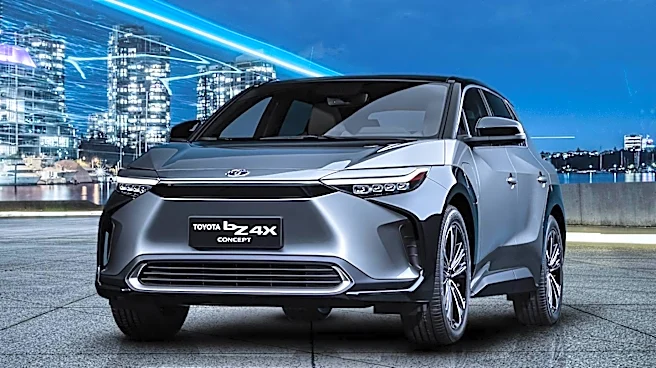
Pony.ai, an autonomous driving technology company headquartered in Fremont, California, has partnered with Toyota to launch a fully driverless commercial robotaxi service in Guangzhou, China. This new service utilizes their jointly developed electric
bZ4X robotaxi, which operates at Level 4 autonomy. The service is available 24/7 through PonyPilot, WeChat, and Alipay. This initiative builds upon a partnership established in 2019, combining Pony.ai's autonomous driving technology with Toyota's expertise in vehicle production, maintenance, and fleet support. The companies aim to deploy approximately 1,000 of these vehicles across major Chinese cities, marking a significant step in the commercialization of autonomous driving technology.
Why It's Important?
This launch is important as it signifies a major advancement in the global autonomous vehicle industry, particularly for a U.S.-headquartered company like Pony.ai. While the immediate deployment is in China, the successful operation of Level 4 autonomous vehicles in a commercial setting demonstrates the maturity and viability of this technology. For U.S. companies, proving ground in international markets can accelerate development and adoption domestically. The collaboration with Toyota, a major global automaker, also highlights the trend of partnerships between tech firms and traditional automotive manufacturers to bring autonomous solutions to market. This could influence future regulatory frameworks and public acceptance of driverless technology in the U.S., potentially paving the way for similar services.
What's Next?
Pony.ai and Toyota are working towards expanding their driverless robotaxi fleet to approximately 1,000 vehicles across major Chinese cities. The success and lessons learned from this deployment in Guangzhou will likely inform their strategies for future expansion, potentially including other international markets and eventually the U.S. The continuous operation and data collection from these Level 4 autonomous vehicles will be crucial for refining the technology, improving safety, and addressing any operational challenges. This could also lead to further collaborations and investments in the autonomous driving sector, as companies seek to gain a competitive edge in this rapidly evolving industry.
Beyond the Headlines
The deployment of driverless robotaxis raises broader implications concerning urban mobility, employment, and ethical considerations. The widespread adoption of such services could significantly alter public transportation systems, reduce traffic congestion, and potentially decrease the number of accidents caused by human error. However, it also brings challenges related to job displacement for professional drivers and the need for robust regulatory frameworks to address liability and safety. The ethical dimensions of autonomous decision-making in complex traffic scenarios will also continue to be a subject of public and policy debate, influencing the pace and scope of future deployments in the U.S. and globally.