





What's Happening?
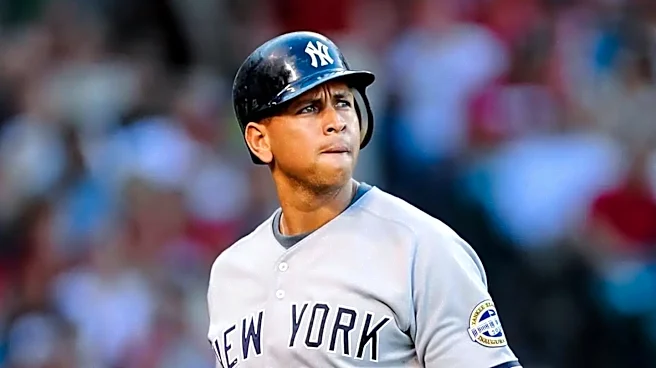
Alex Rodriguez, a former professional baseball player for the Yankees, Mariners, and Rangers, is featured in the New York Yankees' all-time postseason lineup, specifically at third base. Despite a career marked by controversy, including admitted use of performance-enhancing
drugs, his 2009 postseason run is cited as a pivotal moment that changed perceptions of his October play. During that 2009 postseason, Rodriguez achieved a .365 batting average, hit six home runs, and recorded 18 RBIs in 15 games, setting a Yankees record for RBIs in a single postseason. This exceptional performance contributed significantly to New York securing its 27th World Series championship. Across his entire Yankees postseason career from 2004 to 2015, Rodriguez maintained a .240/.363/.431 slash line with 10 home runs and 33 RBIs. His inclusion in this elite lineup underscores his impact during critical moments for the franchise, distinguishing him from other notable third basemen like Graig Nettles and Scott Brosius due to his stronger overall offensive résumé in the postseason.
Why It's Important?
The recognition of Alex Rodriguez's postseason contributions, particularly his 2009 performance, is significant for several reasons. It highlights how individual player achievements in high-stakes environments like the World Series can define legacies, even for athletes whose careers are otherwise complex. For the New York Yankees, this analysis reinforces the historical narrative of their championship successes and the key players who delivered under pressure. It also provides a benchmark for evaluating current and future players' postseason impact, emphasizing that regular-season statistics do not always translate directly to October success. The discussion around Rodriguez's 2009 peak, despite his broader career controversies, underscores the enduring value placed on clutch performances in baseball. This perspective is crucial for fans, sports analysts, and the organization itself in understanding the components of a championship-winning team and the individual efforts that contribute to such triumphs.
What's Next?
While this article primarily focuses on historical analysis, the ongoing discussion of all-time lineups and player legacies in baseball will continue to evolve. Future analyses will likely compare current players' postseason performances against the benchmarks set by players like Alex Rodriguez. As new generations of players emerge and achieve significant postseason milestones, their contributions will be measured against these established standards. For the Yankees organization, maintaining a roster capable of delivering in the postseason remains a constant objective, and the historical context provided by such analyses can inform team building and strategic decisions. The debate over who constitutes the 'greatest' in various positions will persist among fans and experts, ensuring that Rodriguez's place in Yankees history, particularly his 2009 heroics, will remain a point of reference.
Beyond the Headlines
Beyond the immediate statistics and historical context, Alex Rodriguez's inclusion in the Yankees' all-time postseason lineup touches upon deeper themes within sports, particularly the complex relationship between athletic achievement, public perception, and personal controversies. His career, marked by both extraordinary talent and admitted performance-enhancing drug use, exemplifies the challenge of reconciling a player's on-field brilliance with off-field issues. This situation prompts reflection on how sports history grapples with 'tainted' legacies and whether peak performances, especially those contributing to championships, can ultimately overshadow or redefine a player's narrative. It also highlights the subjective nature of 'greatness' in sports, where moments of clutch performance can sometimes outweigh a broader statistical profile or even ethical considerations in the eyes of fans and historians. This ongoing dialogue about Rodriguez's legacy serves as a microcosm for broader discussions about integrity, redemption, and the criteria for historical recognition in professional sports.