









What's Happening?
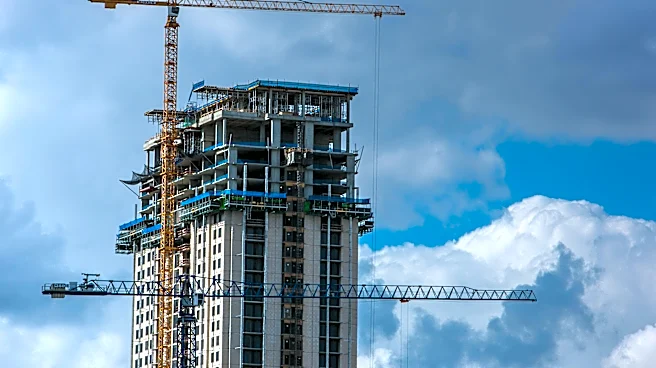
U.S. construction spending increased by 0.1% in May 2026, according to the Commerce Department's Census Bureau. This follows a revised 0.3% increase in April. Despite the rise, construction spending fell 1.5% year-over-year. The increase was driven by public
construction projects, which rose by 0.5%, while private construction spending remained unchanged. The ongoing U.S.-Israeli conflict with Iran has led to higher oil prices, contributing to increased inflation and mortgage rates, which have risen by about 50 basis points since February. This has constrained homebuilding, with spending on new single-family housing projects dropping by 0.1% in May.
Why It's Important?
The slight increase in construction spending highlights the resilience of the sector despite challenges such as rising mortgage rates and geopolitical tensions. Higher mortgage rates, driven by inflation and oil price increases, have dampened homebuilding activity, impacting the housing market. The construction of data centers to support artificial intelligence is a notable area of growth, reflecting the sector's adaptation to technological advancements. The increase in public construction spending suggests government investment in infrastructure, which could support economic growth amid private sector challenges.
What's Next?
The construction industry will continue to face challenges from high mortgage rates and geopolitical uncertainties. Future growth will depend on the resolution of the U.S.-Israeli conflict with Iran and its impact on oil prices and inflation. Government infrastructure projects may provide a buffer against private sector slowdowns, while technological advancements in construction, such as data centers, could offer new opportunities for growth.