




What's Happening?
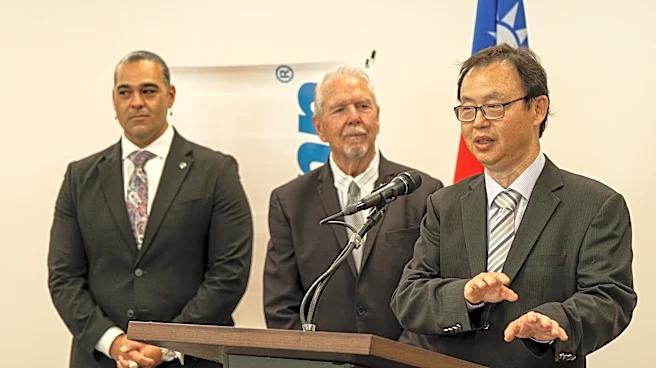
General Dynamics Electric Boat has commenced construction on a new 800,000 square foot campus in Waterford, Connecticut, repurposing the former Crystal Mall complex. The groundbreaking ceremony, attended by local officials and business leaders, marked
a significant step in the company's expansion plans. The majority of the mall was acquired last year, with remaining tenants vacating in the spring. Upon completion in 2027, the facility will house office and software development spaces, alongside dedicated areas for training and workforce development. Electric Boat anticipates that 4,000 to 5,000 employees will work at this new campus, making it the largest employer in Waterford. This expansion follows a substantial $76.6 billion contract with the U.S. Navy, one of the largest shipbuilding contracts ever awarded, and aligns with the company's goal to hire 8,000 workers this year, more than double its 2025 hiring figures. The new campus will complement submarine production efforts in Groton by providing additional space for administrative staff, software developers, and new trainees.
Why It's Important?
This development is crucial for the economic revitalization of southeastern Connecticut, a region that has historically relied on the manufacturing industry and struggled to find stable economic footing. Electric Boat's significant investment and job creation are expected to generate a wave of economic activity, attracting thousands of new workers and potentially stimulating growth in various sectors, including tourism and recreation. The project also represents one of the largest reuses of an existing property in Connecticut, aligning with broader state efforts to breathe new life into old buildings. The establishment of the Shipbuilding Advanced Institute for Learning (SAIL) within the campus will provide critical training for shipbuilders, supporting welding, advanced technology, and innovation, thereby strengthening the regional workforce and ensuring a skilled labor pool for future defense contracts. This initiative underscores the importance of defense industry investments in regional economic stability and workforce development.
What's Next?
Renovation work on the former Crystal Mall complex will continue, with parts of the campus temporarily housing training spaces for new employees. The more permanent Shipbuilding Advanced Institute for Learning (SAIL) is expected to open in the near future, designed to support close to 400 shipbuilders and offer training in welding and advanced technology. Local officials are actively preparing for the influx of new workers, addressing challenges such as a regional housing shortage by developing hundreds of new housing units and investing in infrastructure. The focus for Electric Boat remains on meeting its hiring and workforce goals, while local authorities aim to support responsible growth and ensure the region can accommodate the anticipated economic transformation. The full operational status of the campus in 2027 will be a key milestone, with ongoing efforts to integrate the new workforce into the community and maximize the broader economic benefits.
Beyond the Headlines
The transformation of the Crystal Mall into a high-tech defense industry campus highlights a broader trend of repurposing large retail spaces in response to changing consumer habits and economic needs. This adaptive reuse not only prevents urban decay but also fosters sustainable development by utilizing existing infrastructure. The project also underscores the symbiotic relationship between government defense spending and regional economic development, particularly in areas with a strong industrial heritage. The emphasis on workforce development and advanced training facilities like SAIL reflects a strategic national priority to maintain a skilled labor force for critical defense capabilities, ensuring the U.S. remains competitive in shipbuilding and technological innovation. Furthermore, the challenges of housing and infrastructure development in anticipation of a large workforce influx illustrate the complex social and logistical considerations that accompany major industrial expansions, requiring coordinated efforts from both public and private sectors.