




What's Happening?
UGREEN has unveiled its new HomeAgent ecosystem, a smart home system centered around local AI processing and storage. This system aims to address consumer concerns regarding increasing subscription prices and cloud-based AI privacy issues. The HomeAgent features
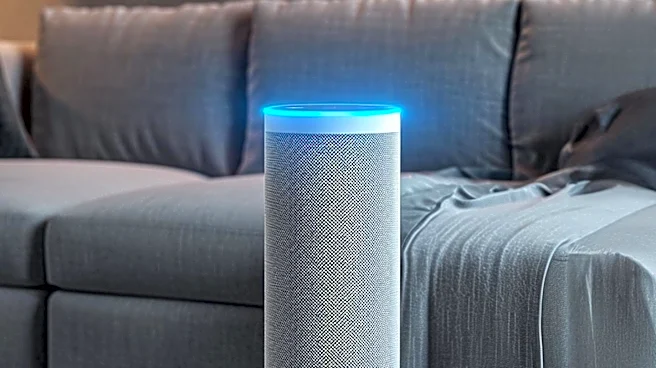
a local hub that acts as a Network Attached Storage (NAS) drive and the central intelligence for the home. It utilizes an AI assistant named Uliya, which can recognize people, vehicles, pets, and packages, summarize events, and create highlight videos from recorded footage. The ecosystem includes three versions of the hub: HA100, HA100 Pro, and MasterAgent MA100, each offering varying levels of AI capabilities and processing power. The system also integrates with UGREEN's smart speaker, security cameras, and a digital photo frame, all designed to operate with local data processing to enhance privacy and eliminate monthly cloud storage fees. The HomeAgent supports Matter compatibility, allowing integration with various third-party smart home devices.
Why It's Important?
This development is significant for the U.S. smart home market as it offers a privacy-centric alternative to prevalent cloud-dependent systems. By processing data locally, UGREEN's HomeAgent aims to alleviate concerns about personal data being exposed to training models or compromised in the cloud. The elimination of recurring subscription fees for cloud storage, a common requirement for many smart home devices, could lead to long-term cost savings for consumers, despite the higher initial investment. The Matter compatibility ensures that the system can integrate with a wide range of existing smart home devices, promoting interoperability and potentially reducing vendor lock-in. This local AI approach could set a new standard for data privacy and cost-effectiveness in the smart home industry, influencing how other manufacturers design and market their products to privacy-conscious consumers.
What's Next?
UGREEN's HomeAgent HA100, HA100 Pro, and MasterAgent MA100 are currently available for pre-order, with a crowdfunding campaign scheduled to launch in October 2026. General availability for these HomeAgent hubs and AIoT devices is expected in 2027. The company plans to expand the ecosystem with additional devices and features, leveraging the extensibility of the MasterAgent MA100 for developers to create new skills. The success of UGREEN's local AI approach will likely depend on its ability to demonstrate the promised software capabilities, such as voice-based rule creation and behavioral intent inference, which were not fully showcased during the initial launch event. The market will be watching to see how consumers respond to the significant upfront cost in exchange for enhanced privacy and reduced subscription fees, especially in comparison to competitors like Anker's MindBase, which also offers local AI processing and broader compatibility.
Beyond the Headlines
The introduction of UGREEN's HomeAgent ecosystem highlights a growing trend towards 'local-first' AI processing in consumer technology, driven by increasing concerns over data privacy and the rising costs of cloud-based subscriptions. This shift could fundamentally alter the competitive landscape of the smart home market, pushing other companies to re-evaluate their reliance on cloud services. The ethical implications of local AI, particularly in terms of data ownership and control, are central to this development. While UGREEN emphasizes local processing for privacy, it's important to note that some functions, such as account registration, remote access, and software updates, may still require internet connectivity. This nuanced approach to 'local-first' will likely become a key differentiator as consumers become more discerning about how their data is handled. The long-term success of such systems could also depend on the development of robust local AI models that can perform complex tasks without constant cloud interaction, fostering a more resilient and private smart home experience.