




What's Happening?
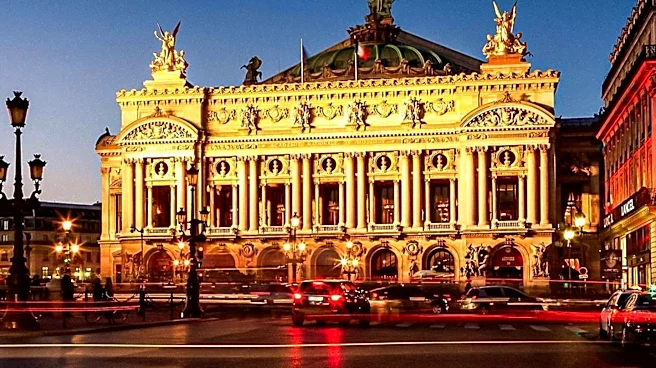
The Palais Garnier (Opéra Garnier) in Paris is renowned for its architectural design that incorporates mirrors, chandeliers, and ceiling paintings to create extended perspectives. This design choice makes the rooms, particularly the Grand Foyer, feel
larger and more theatrical than typical interval spaces. The building, designed by Charles Garnier, was constructed between 1862 and 1875 and was intended to be a civic monument as well as a working theater. Its design emphasizes controlling movement, sightlines, and attention, transforming the arrival, waiting, and performance into a unified public spectacle. The Grand Staircase, for instance, is not merely a route but a stage where the crowd becomes part of the scene, allowing visitors to observe others arriving and pausing. The foyers further extend this performance into public life, with their scale and rhythm echoing a palace gallery.
Why It's Important?
The architectural approach of the Palais Garnier highlights a historical understanding of public spaces, particularly theaters, as venues for social display as much as for artistic performance. This design philosophy underscores how physical environments can be meticulously crafted to influence human perception and interaction. The use of mirrors and strategic perspectives to create an illusion of grandeur and theatricality demonstrates an early form of experiential design, where the building itself contributes to the overall spectacle. This concept has influenced subsequent architectural and interior design, emphasizing the psychological impact of space on its occupants. For contemporary designers and urban planners, the Palais Garnier serves as a case study in how to create immersive and engaging public environments that transcend mere functionality, fostering a sense of occasion and community engagement.
What's Next?
While the source does not detail immediate future plans for the Palais Garnier, its enduring design principles continue to inform discussions in architecture and cultural heritage preservation. The building's ability to blend historical grandeur with a dynamic visitor experience suggests its continued role as a benchmark for theatrical and public space design. Future renovations or interpretations of similar historical venues may draw inspiration from Garnier's methods of using light, reflection, and perspective to enhance the visitor experience. The ongoing appreciation for its unique design ensures its status as a significant cultural landmark, likely to continue attracting visitors and scholars interested in the intersection of art, architecture, and social history.
Beyond the Headlines
The design of the Palais Garnier, particularly its use of mirrors and expansive perspectives, reflects a deeper cultural understanding of the role of public buildings in 19th-century Parisian society. It was not just a place to watch an opera, but a place to be seen, to socialize, and to participate in a grand civic ritual. This emphasis on social display and the theatricality of everyday life offers insights into the values and aspirations of the Second Empire. The building's ability to transform ordinary intervals into part of the performance speaks to a sophisticated manipulation of space to create a continuous, immersive experience. This approach challenges modern notions of efficiency and functionality, suggesting that aesthetic and experiential considerations can be paramount in shaping public interaction and cultural identity.