







What's Happening?
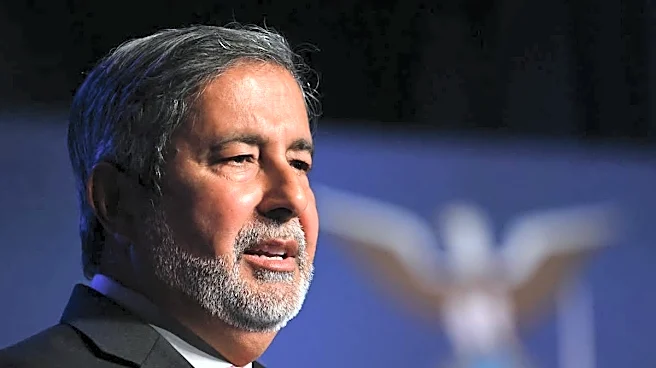
African businesses are increasingly utilizing stablecoins to address challenges in cross-border payments, including delays, high costs, and limited access to U.S. dollars. According to Dickson Nsofor, CEO of Kora, a pan-African payment infrastructure
platform, stablecoins offer a more efficient way to move and settle value across borders. Nsofor highlighted that traditional methods for paying international manufacturers, such as those in China, could take 10 to 14 days due to transfers passing through multiple correspondent banks. Stablecoins provide a dollar-based settlement layer, which can shorten payment processes and allow payment providers to manage dollar liquidity centrally, converting to local currency only when needed by the recipient. This approach helps businesses overcome issues like currency conversion complexities and lengthy international transfers. The adoption of stablecoins is driven by their ability to offer faster and more cost-effective transactions compared to conventional banking systems, which often involve multiple currency conversions and banking relationships across different markets.
Why It's Important?
The growing adoption of stablecoins by African businesses has significant implications for international trade and financial infrastructure. For U.S. businesses engaged in commerce with African counterparts, this shift could lead to more streamlined and predictable payment flows, reducing operational complexities and improving transaction speeds. The increased efficiency in cross-border payments can foster greater trade volumes and economic integration between the U.S. and African markets. Furthermore, the reliance on dollar-backed stablecoins reinforces the U.S. dollar's role as a global reserve currency, even in digital asset ecosystems. However, it also introduces dependencies on foreign token issuers and U.S. policy, which could pose risks related to reserve backing, redemption, and continued access for African businesses. The development underscores a broader trend of digital currencies reshaping global financial transactions, potentially influencing how U.S. financial institutions and regulatory bodies approach stablecoin regulation and international payment systems.
What's Next?
The continued expansion of stablecoin usage in Africa will likely necessitate further development of interoperable infrastructure that connects stablecoins with existing mobile money, banking, and local payment networks. Kora CEO Dickson Nsofor emphasized the need for such infrastructure to facilitate seamless conversion between tokens and local currencies, liquidity management, and transaction reconciliation across disparate systems. Regulatory frameworks will also need to evolve to support compliant conversion between stablecoins and local currencies, along with the establishment of licenses and identity checks across African markets. This could lead to calls for harmonized regulatory approvals to enable compliant crypto and stablecoin businesses to scale across the continent. Additionally, commercial relationships with banks, mobile-money operators, and liquidity suppliers will be crucial for stablecoin providers to deliver funds through local systems. The U.S. may also see increased interest in developing clearer regulatory guidelines for stablecoins, especially as their use in international trade grows, to ensure stability and mitigate potential risks.
Beyond the Headlines
The rise of stablecoins in African business transactions highlights a deeper global shift towards decentralized finance solutions to overcome traditional banking inefficiencies. This trend challenges the conventional dominance of correspondent banking networks and could lead to a more democratized financial landscape, particularly in regions with underdeveloped financial infrastructure. The ethical implications include ensuring financial inclusion for populations without access to traditional banking services, while also addressing potential risks associated with the volatility of underlying cryptocurrencies and the regulatory uncertainties in various jurisdictions. The long-term shift could see a re-evaluation of national monetary policies and the role of central banks in managing currency stability in an increasingly digital and interconnected global economy. For the U.S., this could mean a renewed focus on maintaining the dollar's stability and influence in the digital realm, potentially through the development of a central bank digital currency or more robust regulatory frameworks for privately issued stablecoins.