





What's Happening?
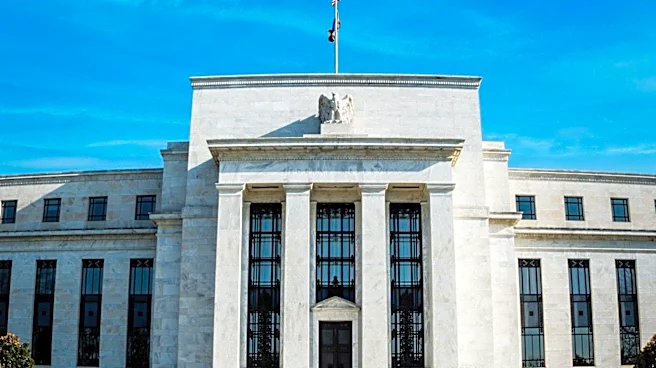
A recent study by the Federal Reserve challenges the conventional macroeconomic theory that anticipated productivity growth leads to higher interest rates. The study, using a vector autoregressive (VAR) model, found that shocks leading to a persistent
increase in total factor productivity (TFP) growth, when foreseen by the public, actually result in declines in both the 10-year Treasury yield and the expected real short rate 5-to-10 years ahead. This contradicts the idea that higher future incomes would boost current spending and reduce savings, while firms anticipating higher returns would front-load investment, thereby pushing interest rates up. The research indicates that the decline in the 10-year Treasury yield is due to a modest temporary rise in short-run interest rates being more than offset by a larger fall in the term premium. This suggests that the recent rise in interest rates cannot be attributed to anticipated higher productivity growth, particularly in the context of AI advancements.
Why It's Important?
This Federal Reserve finding is significant because it re-evaluates a fundamental tenet of macroeconomic theory concerning the relationship between productivity and interest rates. If sustained productivity growth, such as that potentially driven by artificial intelligence, does not lead to higher long-term interest rates, it could have profound implications for monetary policy and investment strategies. For U.S. industries, lower long-term rates could reduce borrowing costs, potentially stimulating investment and expansion, even during periods of strong economic growth. Conversely, if policymakers continue to operate under the assumption that productivity gains will naturally lead to higher rates, they might misinterpret market signals or implement policies that are not aligned with the actual economic dynamics. This research suggests that other macroeconomic factors are likely driving the recent surge in long-term Treasury yields, prompting a need for re-evaluation of current economic models and forecasts.
Beyond the Headlines
The study's findings delve into the nuanced components of interest rates, specifically highlighting the role of the term premium. The term premium, which reflects the extra compensation investors demand for holding long-term bonds, is found to decline when productivity shocks boost output and consumption. This occurs because a stronger economy reduces the market's perception of risk, making investors less demanding of additional compensation for long-term investments. Furthermore, with output expanding without a corresponding rise in inflation, uncertainty surrounding future monetary policy diminishes, increasing demand for longer-term bonds. The positive economic effects also extend to the fiscal outlook, as increased real output and tax base expand fiscal space, which is associated with lower long-term yields and term premia. This complex interplay suggests that the impact of productivity on interest rates is not a simple, direct correlation but rather a multifaceted process influenced by risk perception, inflation expectations, and fiscal health.