






What's Happening?
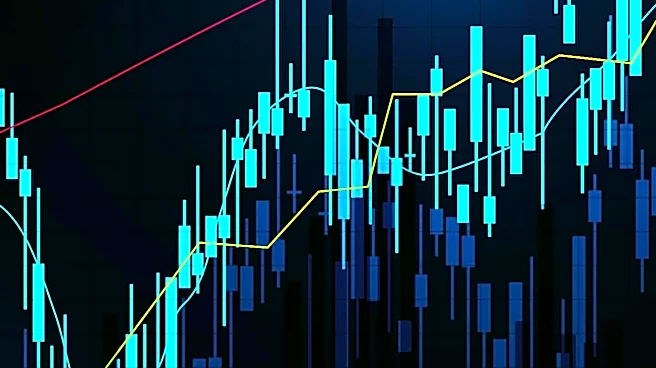
The bearish engulfing pattern is a two-candlestick formation in technical analysis that often signals a potential bearish reversal after an uptrend. This pattern occurs when a bullish candle is followed by a larger bearish candle whose real body completely
engulfs the previous bullish candle's real body. This suggests a shift in market sentiment where buyers initially maintain control, but sellers subsequently push the price lower with enough strength to erase the previous candle's gains. Identifying this pattern involves looking for a preceding uptrend, examining the two candlesticks (first bullish, second bearish and engulfing), and checking that the bearish candle closes below the previous bullish candle's opening price. The pattern's significance is often strengthened when it appears near a resistance level, indicating increased selling pressure. Traders can use tools like Chartink to scan for this pattern across various markets, including stocks, forex, commodities, and cryptocurrencies.
Why It's Important?
The bearish engulfing pattern is a crucial indicator for traders and investors in the U.S. market as it provides an early warning of a potential shift from bullish to bearish momentum. Recognizing this pattern can help market participants make informed decisions regarding entry and exit points, risk management, and overall trading strategies. A confirmed bearish engulfing pattern can lead to increased selling pressure, potentially causing price declines in individual stocks or broader market indices. This can impact portfolio values and investment returns. For short-term traders, it offers opportunities to take short positions or exit long positions to mitigate losses. For long-term investors, it might signal a period of consolidation or a deeper correction, prompting a re-evaluation of holdings. The pattern's reliability is enhanced when combined with other technical indicators like the Relative Strength Index (RSI), trading volume, moving averages, and support/resistance levels, providing a more comprehensive market assessment.
What's Next?
Traders who identify a bearish engulfing pattern will typically look for confirmation from subsequent price action before making trading decisions. This might involve waiting for another bearish candle or a break below the pattern's low. Entry points are often considered after the bearish candlestick closes and engulfs the previous bullish candle. Stop-loss orders are usually placed above the bearish engulfing candle's high or a nearby swing high to manage risk. Profit targets are set near support levels, previous swing lows, or based on a predefined risk-to-reward ratio. It is crucial to combine this pattern with sound risk management practices, including appropriate position sizing and predefined exit rules. Market participants will also monitor broader market conditions, news events, volatility, and liquidity, as these factors can influence price movements and the effectiveness of the pattern. The pattern's appearance across different timeframes (intraday, daily, weekly) will also guide traders in aligning their strategy with their trading horizon.
Beyond the Headlines
The bearish engulfing pattern, while a technical indicator, reflects underlying psychological shifts in market sentiment. It signifies a moment where buyer exhaustion meets aggressive seller entry, leading to a rapid reversal of control. This dynamic highlights the constant battle between supply and demand that drives market prices. The pattern's effectiveness across various asset classes underscores the universality of human emotions like greed and fear in financial markets. However, its limitations, such as the potential for false signals and the need for confirmation, emphasize that no single indicator is foolproof. This reinforces the importance of a holistic approach to market analysis, integrating technical, fundamental, and macroeconomic factors. Understanding such patterns not only aids in trading decisions but also provides insight into market psychology, helping investors to anticipate and react to shifts in collective investor behavior, thereby fostering a more disciplined and informed approach to market participation.