






What's Happening?
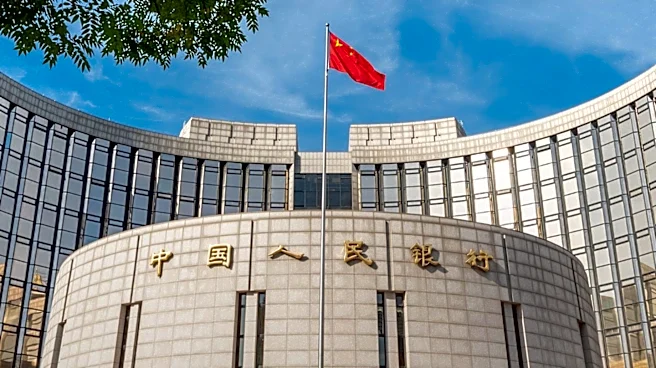
The People's Bank of China (PBOC) has released data indicating a substantial shift in household financial behavior and lending priorities. Between January and October 2026, household borrowing from financial institutions contracted by RMB 1.46 trillion,
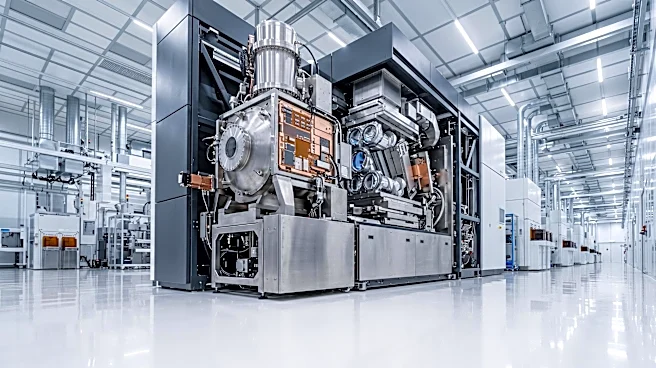
while household bank deposits increased by RMB 8.47 trillion, reaching approximately RMB 174 trillion by the end of October. This accumulation of savings and reduction in debt marks a reversal of previous trends where households increasingly took on debt. Concurrently, the PBOC's third-quarter 2026 lending report shows a significant redirection of credit. Outstanding loans to technology-based small and medium-sized enterprises expanded by 20.1% over the preceding year, and lending to high-technology companies increased by 17.2%. In contrast, lending to sectors like residential mortgages and property development contracted by 4.1% and 9.1% respectively, signaling a strategic pivot in the allocation of financial resources towards advanced technology and away from the property sector.
Why It's Important?
This financial shift has profound implications for China's economic structure and global economic dynamics. The household deleveraging, while potentially improving individual financial health, could lead to reduced domestic consumption and increased deflationary pressures if not managed carefully. This could impact global demand for goods and services, affecting international trade partners. The redirection of credit towards high-technology sectors signifies China's strategic intent to foster innovation and reduce reliance on traditional growth drivers like real estate. This could accelerate China's technological advancement, potentially intensifying global competition in key tech industries. For the U.S., this could mean increased competition in areas like AI, semiconductors, and renewable energy, while also presenting opportunities for collaboration or new market dynamics. The long-term success of this rebalancing act will determine whether China can achieve sustainable growth without relying on debt-fueled consumption or an overheated property market.
What's Next?
In response to these trends, Beijing's 15th Five-Year Plan (2026-2030) aims to strengthen domestic demand, increase household incomes, and improve social protection, alongside reforming the housing system to be less dependent on property expansion. Policy interventions in 2026 include a consumer goods trade-in program and a fiscal and financial domestic demand support fund. A mortgage subsidy, effective October 1, targets first-time buyers of modest homes, indicating a cautious approach to stimulating the property market without reigniting speculative bubbles. Economists within China are debating whether the government should focus on encouraging new borrowing or alleviating the burden of past borrowing. The effectiveness of these measures will be crucial in determining whether China experiences a prolonged balance-sheet adjustment, similar to Japan's post-bubble era, or successfully transitions to a new, more sustainable economic model driven by technology and domestic consumption.
Beyond the Headlines
The underlying reasons for increased household savings extend beyond immediate economic conditions. Factors such as employment uncertainty, pension concerns, and inadequate social safety nets contribute to a high precautionary savings rate among Chinese households. This suggests that simply reducing interest rates may not be sufficient to stimulate consumption; broader reforms in healthcare, social security, and employment protection are necessary to instill greater financial security and encourage spending. Furthermore, the uneven distribution of household debt means that while some affluent households are deleveraging, financially vulnerable households may remain burdened. This disparity could exacerbate social inequalities. The shift in credit allocation from property to technology also raises questions about the efficiency of capital deployment and potential overinvestment in certain industrial sectors, which could lead to new economic imbalances if domestic consumption remains subdued and industries become overly reliant on export markets.