


What's Happening?
The Pittsburgh Steelers are reportedly shifting their quarterback acquisition strategy for the 2027 NFL season, moving away from their recent reliance on veteran quarterbacks. According to insider Gerry Dulac, the team will no longer pursue experienced
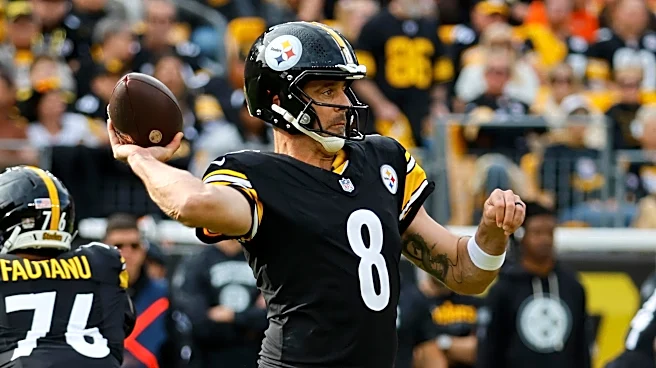
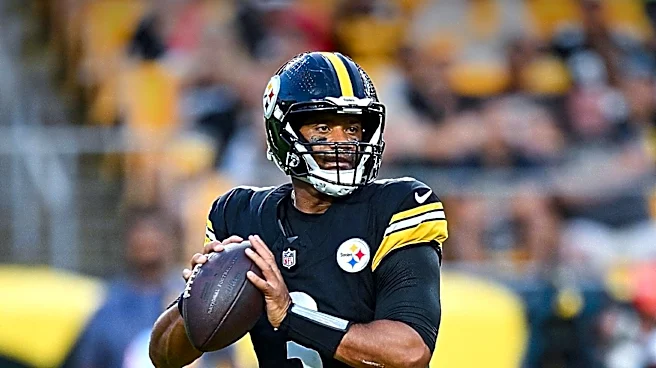
signal-callers, a practice that has been a staple since Ben Roethlisberger's retirement. This change comes after several veteran acquisitions, including Mitch Trubisky, Russell Wilson, and Justin Fields, failed to significantly improve the team's performance. While the signing of Aaron Rodgers is noted as a successful move, his anticipated retirement after the 2026 season is prompting the Steelers to look internally. The team is expected to develop one of their younger quarterbacks, such as Will Howard or Drew Allar, to lead the franchise in the future.
Why It's Important?
This strategic pivot by the Pittsburgh Steelers signifies a significant shift in their long-term team building philosophy. For years, the Steelers have attempted to bridge the gap post-Roethlisberger with established, albeit sometimes aging, talent. The failure of these veteran acquisitions to 'move the needle' has likely led to this re-evaluation. This decision impacts not only the Steelers' roster construction but also the broader NFL quarterback market, as a prominent team will no longer be a primary suitor for veteran free-agent quarterbacks. It also places increased pressure and opportunity on young prospects like Will Howard and Drew Allar, who will now be central to the team's future success. The success or failure of this new approach could influence other NFL franchises facing similar post-franchise-quarterback dilemmas.
What's Next?
Following Aaron Rodgers' projected retirement after the 2026 season, the Pittsburgh Steelers will likely initiate a competitive process to determine their next starting quarterback from their current pool of young talent, specifically Will Howard or Drew Allar. The team's focus will shift to their development and integration into the offensive scheme. This period will involve intensive coaching, training camp battles, and potentially pre-season evaluations to identify the most promising candidate. The Steelers' front office and coaching staff will be under scrutiny to demonstrate the efficacy of this new strategy, as the performance of these young quarterbacks will be critical to the team's competitiveness in the post-Rodgers era. The team will also need to manage fan expectations, which have been accustomed to veteran leadership at the quarterback position.
Beyond the Headlines
The Steelers' decision to abandon the 'veteran QB merry-go-round' reflects a broader trend in the NFL where teams are increasingly prioritizing the development of young, cost-controlled talent at the quarterback position. This approach, while carrying inherent risks, offers the potential for long-term stability and financial flexibility. It also highlights the challenges of replacing a legendary quarterback, as even well-intentioned veteran acquisitions can fail to replicate past success. This shift could lead to a more patient and methodical approach to roster building, emphasizing scouting, drafting, and player development over short-term fixes. The ethical implications involve the pressure placed on young players to perform at a high level early in their careers, and the potential for a team's competitive window to be impacted by the learning curve of an inexperienced quarterback.