









What's Happening?
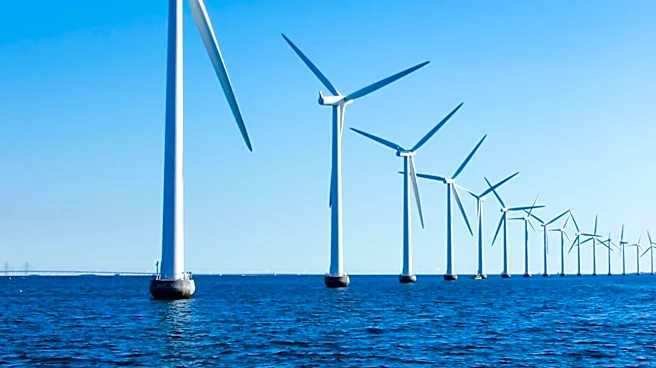
Ørsted has announced a new phase in its sustainability efforts, aiming to achieve net-zero greenhouse gas emissions across its entire value chain by 2040. This initiative, part of their 'Next Zero' strategy, focuses on reducing emissions associated with
the design, construction, manufacturing, transportation, and operation of offshore wind farms. The company plans to address emissions embedded throughout its value chain, particularly those linked to raw materials and industrial processes. Ørsted has already made significant progress, with renewable energy accounting for 99% of its energy production and a 98% reduction in emissions from its operations since 2006. The company is collaborating with over 50 strategic suppliers to reduce emissions from steel production, maritime fuel consumption, and cable manufacturing.
Why It's Important?
This development is significant as it highlights Ørsted's commitment to deep decarbonization in the renewable energy sector. By targeting emissions throughout its value chain, Ørsted sets a precedent for other companies in the industry to follow. The initiative could drive demand for low-carbon materials and technologies, influencing supply chains and potentially leading to price premiums for green-grade materials. Ørsted's strategy also underscores the importance of collaboration with suppliers to achieve environmental goals, which could inspire similar partnerships across the industry. The move is likely to bolster Ørsted's position as a leader in renewable energy and climate action.
What's Next?
Ørsted's ongoing collaborations with suppliers and the development of low-emission technologies will continue to play a crucial role in achieving its net-zero target. The company is expected to further invest in cleaner steel production technologies and innovative engineering solutions to reduce emissions. As Ørsted progresses towards its 2040 goal, it may face challenges related to the scalability of these technologies and the need for industry-wide adoption of similar practices. The success of Ørsted's strategy could influence regulatory policies and encourage other companies to adopt comprehensive decarbonization plans.