








What's Happening?
U.S. commercial crude oil inventories have decreased by 3.8 million barrels, bringing the total to 408.4 million barrels, which is 7% below the five-year average for this time of year. This decline is reported by the Energy Information Administration
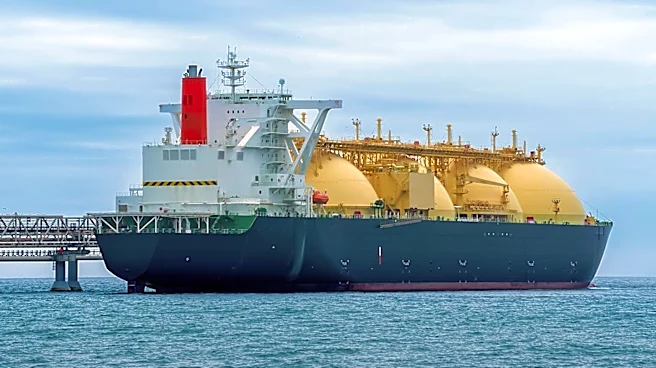
(EIA) for the week ending June 26, 2026. The decrease in inventories is accompanied by a reduction in crude oil imports, which averaged 5.3 million barrels per day, down by 291,000 barrels per day from the previous week. Over the past four weeks, imports have averaged about 5.5 million barrels per day, marking a 10.9% decrease compared to the same period last year. Meanwhile, U.S. crude oil refinery inputs averaged 17.2 million barrels per day, slightly lower than the previous week, with refineries operating at 96.6% capacity. Gasoline production increased to 10.0 million barrels per day, while distillate fuel production decreased to 5.2 million barrels per day.
Why It's Important?
The reduction in U.S. crude oil inventories and imports reflects broader trends in the global oil market, where supply dynamics are shifting. The decrease in inventories could signal tighter supply conditions, potentially influencing oil prices and impacting the energy sector. Lower imports suggest a reliance on domestic production or alternative sources, which could affect international trade balances and energy security strategies. The changes in refinery operations and production levels also highlight adjustments in response to market demands and economic conditions. These developments are crucial for stakeholders in the energy industry, including producers, refiners, and policymakers, as they navigate the complexities of supply and demand in the oil market.
What's Next?
Future developments in the U.S. oil market will likely focus on how inventory levels and import patterns evolve in response to global supply and demand shifts. Stakeholders will be monitoring potential policy changes, such as adjustments in production quotas by OPEC, and their impact on U.S. oil imports and prices. Additionally, the energy sector may see increased investment in domestic production capabilities to mitigate reliance on imports. The ongoing analysis of refinery operations and capacity utilization will be critical in understanding the industry's ability to adapt to changing market conditions.