



What's Happening?
Smart factories are transforming the manufacturing landscape by integrating connected machines, sensors, analytics, and automation to optimize production in real time. This advanced approach enables faster, more informed decision-making, leading to significant
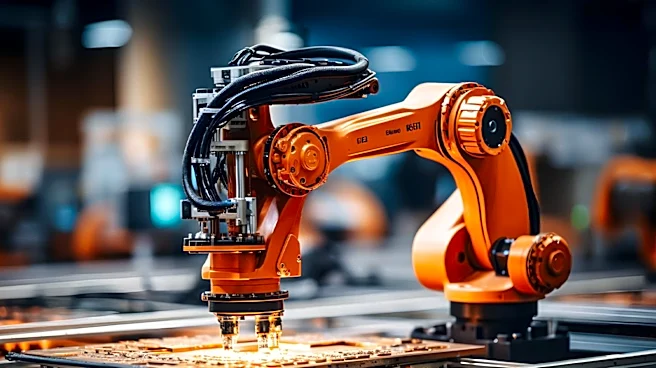
improvements in efficiency and output. Key technologies driving this shift include industrial IoT, edge and cloud computing, artificial intelligence (AI), machine vision, robotics, digital twins, and robust industrial networks. Unlike traditional factories that rely on isolated machines and manual reporting, smart factories facilitate data sharing across systems, allowing for proactive problem-solving and adaptive scheduling. This real-time monitoring and adjustment capability helps anticipate issues, optimize processes, and trace every product throughout its lifecycle, creating a more transparent and responsive operation. The adoption of smart manufacturing is propelled by various factors, including the pursuit of higher productivity, the need for supply chain resilience, challenges posed by labor constraints, increasing demands for product customization, and growing sustainability targets. Manufacturers are moving from pilot projects to widespread implementation, recognizing the tangible benefits of data-driven production.
Why It's Important?
The widespread adoption of smart factories holds significant implications for U.S. industries, promising enhanced competitiveness and operational resilience. By reducing downtime, improving product quality, and increasing energy efficiency, smart manufacturing directly addresses critical challenges faced by American manufacturers. The ability to respond quickly to demand changes and customize products offers a strategic advantage in a dynamic global market. Furthermore, the integration of predictive maintenance capabilities allows companies to identify and address potential equipment issues before they lead to costly breakdowns, thereby extending asset life and reducing operational expenses. This shift also contributes to greater supply chain resilience, enabling U.S. businesses to better withstand disruptions and maintain consistent production. For the workforce, smart factories necessitate new skill sets in data analytics, AI, and automation, potentially leading to job retraining and upskilling initiatives. Companies that embrace these technologies stand to gain market share and improve profitability, while those that lag may face competitive disadvantages due to higher operational costs and slower response times.
What's Next?
The future of smart factories involves continued integration of advanced AI and more flexible automation solutions. Manufacturers are expected to further invest in robust cybersecurity measures to protect their interconnected operational technology from increasing threats. The trend will also see greater integration across entire plant networks and broader supply chains, moving towards a more holistic and synchronized manufacturing ecosystem. Overcoming challenges such as legacy equipment integration, data silos, and skill shortages will be crucial for widespread adoption. Companies will likely focus on phased implementation strategies, starting with specific use cases that demonstrate measurable outcomes, such as reduced downtime or improved quality, before scaling up. Furthermore, the development of standardized protocols and interoperable technologies will be key to facilitating seamless data flow and system integration across diverse manufacturing environments. Government initiatives and industry collaborations may also play a role in accelerating the adoption of smart manufacturing practices, particularly for small and medium-sized enterprises.
Beyond the Headlines
Beyond the immediate operational benefits, the rise of smart factories signals a fundamental shift in the nature of industrial work and economic competitiveness. Ethically, the increased automation and AI integration raise questions about the future of human labor, necessitating discussions around workforce retraining, job displacement, and the creation of new roles that leverage human-machine collaboration. Legally, the vast amounts of data generated by smart factories will require robust frameworks for data privacy, ownership, and security, especially as operational technology becomes more interconnected. Culturally, the transition to smart manufacturing demands a shift in organizational mindset, fostering a culture of continuous innovation, data literacy, and adaptability. In the long term, this evolution could lead to more localized and agile manufacturing, reducing reliance on distant supply chains and potentially fostering a resurgence of domestic production capabilities. The ability of nations to effectively implement and scale smart factory technologies will be a critical determinant of their industrial leadership in the coming decades, influencing global trade dynamics and economic power balances.