






What's Happening?
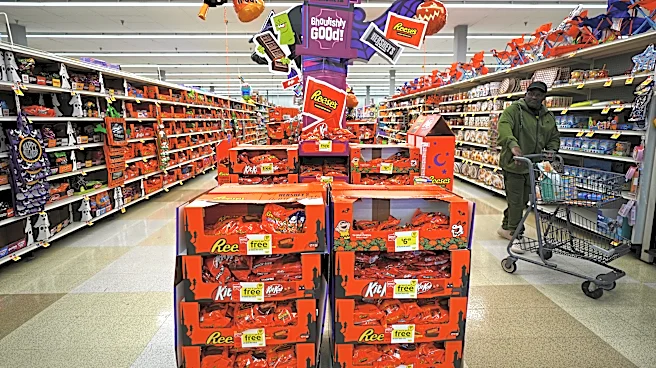
Halloween candy sales in the U.S. are experiencing a slow start this year, with a 6.7% decline in the month ending October 17 compared to the same period last year, according to NielsenIQ. This follows an 11.7% drop in candy sales in mid-September, which
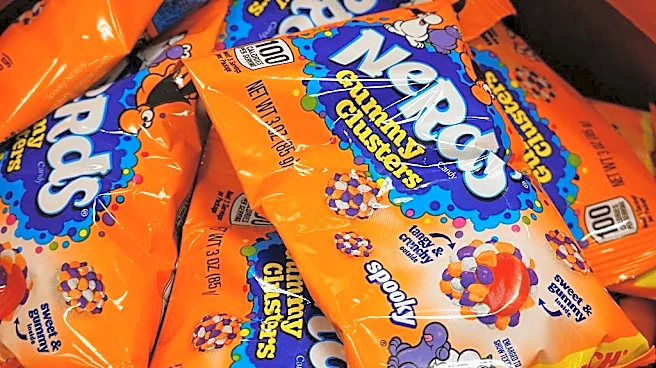
erased preseason gains observed in the previous two years. Chris Costagli, a vice president and food thought leader at NielsenIQ, attributes this downturn to U.S. consumers grappling with high living costs and elevated chocolate prices. Consumers are reportedly spending significantly more on essential items such as fuel, housing, clothing, and food, leading to reduced discretionary spending on treats like Halloween candy. The only segment showing sales growth through mid-October was small bags of candy, while large and extra-large bags saw the most significant declines.
Why It's Important?
This decline in Halloween candy sales highlights broader economic pressures affecting U.S. consumers. The shift in purchasing behavior, where consumers are prioritizing essential goods over discretionary items, indicates a tightening of household budgets. This trend could impact various sectors beyond confectionery, as consumer confidence and purchasing power are critical drivers of economic activity. For retailers and manufacturers, understanding this shift is crucial for inventory management, pricing strategies, and marketing efforts. The preference for smaller candy bags suggests that consumers are still participating in holiday traditions but are doing so with more cost-conscious decisions, potentially opting for less expensive or smaller quantities. This situation reflects a challenging economic environment where inflation and high living costs are directly influencing consumer spending habits.
What's Next?
The ongoing economic conditions, including high inflation and living costs, are likely to continue influencing consumer spending patterns in the short to medium term. Retailers and candy manufacturers may need to adapt their strategies to cater to more budget-conscious consumers, potentially by offering more value-oriented products or smaller package sizes. The performance of Halloween candy sales could serve as an indicator for consumer spending during other upcoming holiday seasons, such as Thanksgiving and Christmas. If affordability concerns persist, similar trends might be observed in other seasonal or discretionary product categories. Businesses will need to closely monitor economic indicators and consumer sentiment to adjust their operations and offerings accordingly.
Beyond the Headlines
The slow start to Halloween candy sales points to a deeper societal impact of sustained economic strain. Beyond the immediate financial implications for businesses, this trend can affect cultural traditions and community engagement. Halloween, a widely celebrated holiday, often involves communal activities like trick-or-treating, which are supported by candy purchases. A reduction in candy sales, particularly larger bags, could subtly alter the experience of the holiday for families and communities. It underscores how economic pressures can permeate everyday life, influencing even seemingly small aspects of cultural celebration. This situation also raises questions about the long-term resilience of consumer spending on non-essential items in an inflationary environment and how businesses will innovate to maintain consumer engagement during such periods.