





What's Happening?
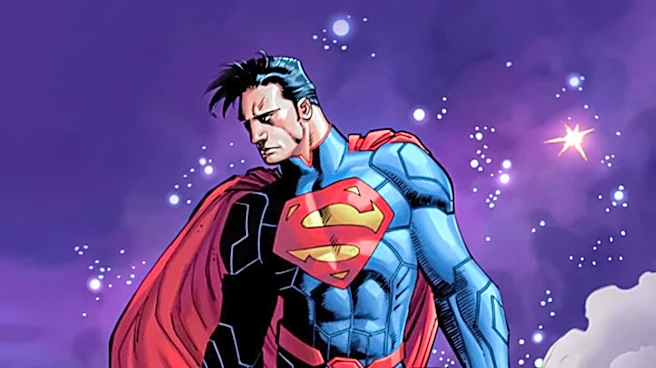
DC Black Label has released the second issue of its comic book series, 'Superman: The Stranger,' written and illustrated by Wes Craig. This series reimagines Superman's early adventures, setting them in an Art Deco-inspired 1938 Metropolis. The narrative
explores Clark Kent's journey as Superman through a modern storytelling lens, focusing on his efforts to uplift the downtrodden. The second issue delves into Clark's internal conflict regarding the effectiveness of his vigilante actions and introduces Lois Lane, an intrepid reporter whose articles provide Clark with information to aid his mission. The series has garnered critical acclaim for its bold and unsettling approach to the Superman mythos, drawing comparisons to Frank Miller's 'The Dark Knight Returns.' It challenges traditional Superman tropes by presenting a version of Clark Kent who grew up as an orphan, without the moral guidance of the Kents, leading to a more isolated and at times unpredictable character.
Why It's Important?
The release of 'Superman: The Stranger' #2 is significant for the comic book industry as it represents a continued trend of reinterpreting classic superhero narratives for contemporary audiences. By placing Superman in a politically charged 1938 setting and exploring his character without the traditional Smallville upbringing, the series offers a fresh perspective on heroism and justice. This approach can attract new readers while engaging long-time fans with a more philosophical and noir-infused take on the iconic character. The critical reception, comparing it to influential works like 'The Dark Knight Returns,' suggests its potential to become a landmark series, influencing future superhero storytelling. The exploration of themes such as social inequality, the nature of criminality, and the role of a hero in a complex world resonates with current societal discussions, making the series culturally relevant beyond its entertainment value.
What's Next?
The series is planned for six issues, and with the second issue now available, readers can anticipate the continuation of Clark Kent's evolving understanding of his role as Superman. Future issues are expected to further explore the implications of his isolated upbringing and his interactions with Lois Lane, who is poised to become a key figure in his crusade. The narrative is set to delve deeper into the political landscape of 1938 Metropolis and how this version of Superman navigates its challenges. Critics have expressed hope for the series to expand beyond its initial six issues, potentially exploring different eras such as World War II or the Red Scare, which would offer further opportunities to examine how this unique Superman reacts to various historical contexts. The ongoing critical discussion and reader engagement will likely influence the potential for future expansions of this universe.
Beyond the Headlines
Beyond its immediate narrative, 'Superman: The Stranger' delves into profound ethical and philosophical questions about heroism. By presenting a Superman who questions the nature of criminality and whether his actions truly help the most invisible members of society, the series challenges the simplistic notions of good versus evil often found in superhero stories. The absence of the Kents' moral compass forces Clark to forge his own understanding of justice, leading to a more complex and at times darker portrayal of the character. This reinterpretation encourages readers to consider the societal factors that contribute to crime and the responsibilities of those with power. The Art Deco setting and noir aesthetic also contribute to a deeper cultural immersion, reflecting the anxieties and social dynamics of the 1930s, which can draw parallels to contemporary issues of social justice and inequality. The series' success could pave the way for more experimental and thought-provoking takes on established comic book characters.