


What's Happening?
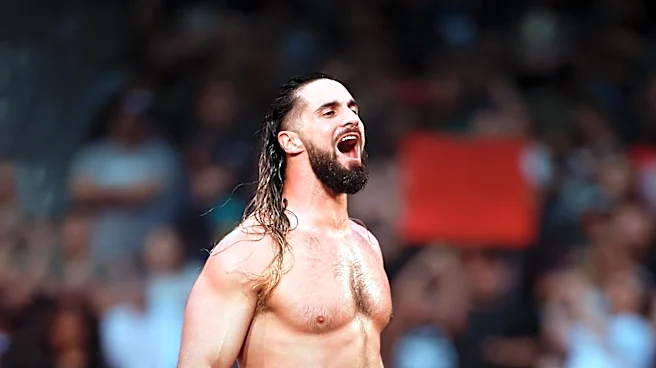
Former WWE wrestler Ryback has publicly defended Seth Rollins against criticism stemming from a viral video recorded at a Mexican airport. The video showed Rollins and Becky Lynch being surrounded by fans, with some critics, including Vince Russo, alleging
that Rollins left Lynch behind. Ryback, who has a long-standing professional relationship with Rollins from their time in WWE, stated that judging Rollins' character based on a few seconds of footage without full context is unfair. He emphasized that social media often amplifies short clips, stripping away crucial information and creating sensationalized narratives. Ryback highlighted that he knows Rollins to be a 'stand-up guy and a genuinely good human being' and urged for more caution before drawing conclusions from decontextualized content.
Why It's Important?
This incident underscores the pervasive influence of social media in shaping public perception, particularly concerning public figures. The rapid spread of decontextualized video clips can quickly lead to widespread condemnation, impacting individuals' reputations and careers. For professional wrestling, where public image and fan interaction are integral, such incidents can create significant public relations challenges for performers and the organizations they represent. Ryback's intervention highlights a call for greater scrutiny of online narratives and a defense of individuals against what he perceives as unfair judgment. It also brings to light the pressure and scrutiny that public figures, especially athletes and entertainers, face in an era of constant digital surveillance and instant sharing, where every moment can be captured and reinterpreted.
What's Next?
The debate surrounding Seth Rollins' actions and the broader implications of social media's role in public judgment are likely to continue. Unless Rollins or Becky Lynch provide their own account of the airport incident, the differing interpretations, as exemplified by Vince Russo's criticism and Ryback's defense, will persist. This event may prompt further discussions within the entertainment and sports industries regarding media training for public figures, strategies for managing online narratives, and the responsibility of fans and commentators in interpreting viral content. It could also lead to increased awareness among public figures about the potential for misinterpretation of their actions in public spaces.
Beyond the Headlines
Beyond the immediate controversy, this situation touches upon deeper ethical considerations regarding privacy, public scrutiny, and the 'cancel culture' phenomenon. The incident raises questions about the extent to which public figures are entitled to privacy in public spaces and the ethical boundaries of fan interaction. It also highlights the psychological toll that constant public judgment can take on individuals, particularly when narratives are formed without complete information. The ease with which a short video can ignite a public firestorm underscores the need for critical media literacy among consumers of online content and a more nuanced approach to evaluating actions captured in isolated moments. This event serves as a microcosm of the broader challenges faced by public figures in the digital age.