




What's Happening?
Gary Marcus, a prominent scientist and author, has voiced strong criticisms regarding the current state of the American AI industry. Marcus asserts that the industry operates with a distinct set of standards compared to other sectors, implying a lack
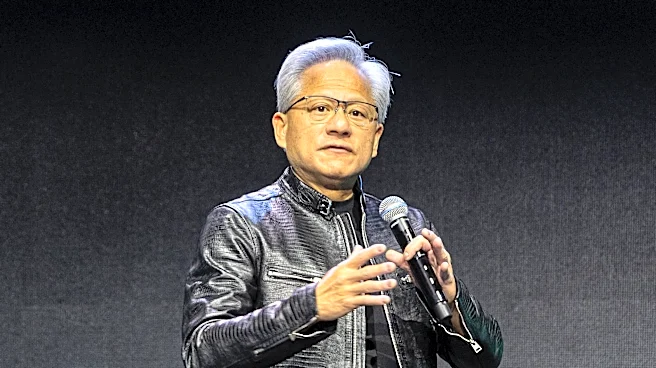
of accountability. He specifically points to the return of Jensen Huang to NVIDIA as an example, suggesting it reflects an environment where AI leaders are 'too big to fail.' Marcus argues that this allows individuals within the AI sector to act without sufficient oversight, developing unregulated products, circumventing export rules, and making unsubstantiated claims about software consciousness to exploit vulnerable individuals. He contends that this unchecked power enables individuals to secure significant financial gains without necessarily demonstrating superior work ethic, especially if they have high-level political connections. Marcus's remarks highlight a perceived double standard within the AI industry, where leaders and employees may operate with impunity.
Why It's Important?
Marcus's critique is significant because it raises fundamental questions about ethical governance and regulatory oversight within the rapidly expanding U.S. AI industry. If the industry is indeed operating with a different set of standards, it could lead to systemic risks, including the deployment of unsafe or manipulative technologies. The lack of regulation and the potential for leaders to act without consequence could undermine public trust in AI advancements and create an uneven playing field for businesses. Furthermore, the suggestion that political connections can safeguard careers in AI, regardless of conduct, points to potential issues of cronyism and a lack of meritocracy. This situation could deter innovation from smaller, more ethical companies and concentrate power in the hands of a few large, potentially unaccountable entities, impacting the long-term health and integrity of the American technology sector.
Beyond the Headlines
The implications of Marcus's observations extend beyond immediate industry practices, touching upon broader societal concerns about technological power and its control. The idea that AI products are 'fully unregulated' and that companies can 'claim their software is conscious to trap vulnerable humans into addiction' suggests a potential for significant societal harm, ranging from privacy violations to psychological manipulation. This raises ethical dilemmas about the responsibility of AI developers and the need for robust ethical frameworks that go beyond self-regulation. The comparison to other industries implies a call for AI to be subjected to similar levels of scrutiny and accountability, potentially leading to calls for new legislation or the strengthening of existing regulatory bodies. The unchecked power described could also foster a culture of impunity, where rapid technological advancement is prioritized over ethical considerations and public welfare, potentially leading to unforeseen long-term consequences for democratic values and individual autonomy.