





What's Happening?
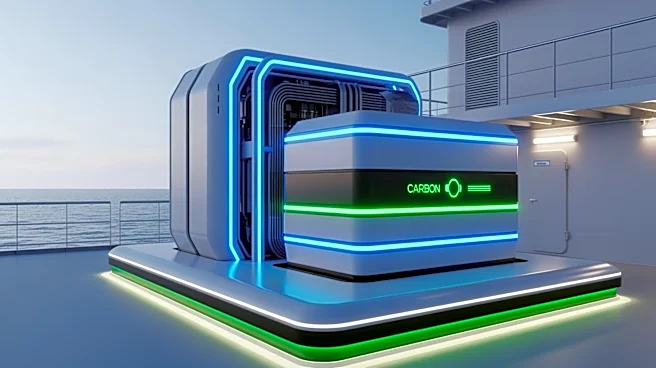
DNV has released a recommended practice (RP) aimed at standardizing the measurement and verification of onboard carbon capture and storage (OCCS) systems on ships. This initiative is part of a broader effort to reduce emissions from vessels that continue
to rely on fossil fuels. The RP, titled 'Performance of onboard carbon capture and storage systems,' is designed around mass balance principles and establishes a set of performance metrics such as capture rate, captured CO2 quantity, emissions to the atmosphere, and gross capture efficiency. The framework is technology-neutral, encompassing various approaches including pre-combustion, post-combustion, and oxy-fuel methods. Additionally, it includes a structured third-party verification process to ensure system documentation, measurement setup, performance calculations, and uncertainty evaluation are thoroughly covered. This development comes as the International Maritime Organization (IMO) is working on guidelines for OCCS, expected to be completed by 2028.
Why It's Important?
The introduction of this standardized framework by DNV is significant as it provides the maritime industry with a unified technical language to advance onboard carbon capture solutions. With approximately 90% of the operational fleet still dependent on fossil fuels, OCCS presents a viable option for reducing emissions from ships that cannot easily transition to low-GHG fuels. The potential impact is substantial; DNV's Maritime Forecast to 2050 suggests that developing CO2 offloading infrastructure at just 20 of the world's largest ports could cut total world fleet CO2 emissions by 9%. This initiative not only supports the maritime industry's decarbonization goals but also aligns with global efforts to mitigate climate change by reducing greenhouse gas emissions.
What's Next?
As the maritime industry continues to explore decarbonization strategies, the adoption of DNV's recommended practice could accelerate the development and implementation of OCCS technologies. The ongoing work by the IMO to establish guidelines for OCCS, expected to be completed by 2028, will further support this transition. Stakeholders in the maritime sector, including shipowners, operators, and regulatory bodies, are likely to engage with this framework to enhance their environmental compliance and sustainability efforts. The development of CO2 offloading infrastructure at major ports will be a critical next step in realizing the full potential of onboard carbon capture systems.