








What's Happening?
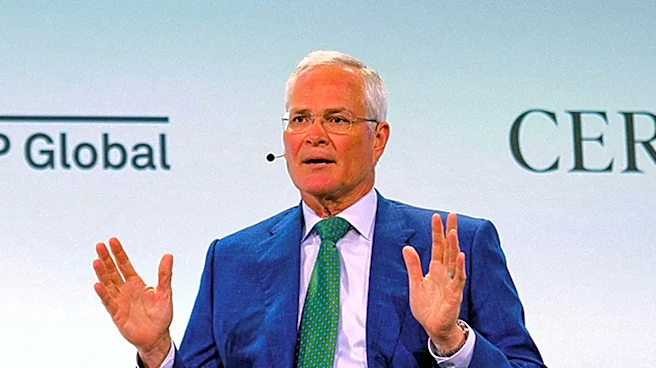
Demis Hassabis, CEO of Google DeepMind, has proposed the establishment of an international watchdog to rigorously test and review advanced AI models before their release. This proposal, detailed in a recent blog post, has garnered support from industry
leaders like OpenAI's Sam Altman and Elon Musk. Hassabis plans to discuss this initiative with U.S. policymakers in Washington. The proposal comes in response to concerns about the cybersecurity capabilities of AI models like Anthropic's Mythos, which Hassabis views as a potential threat. The plan suggests appointing independent technical experts to the watchdog, with funding from leading AI firms, and mandates a review period of up to 30 days for new models. The initiative aims to address the lack of cohesive AI regulation in the U.S., where the Trump administration has shown inconsistent regulatory approaches.
Why It's Important?
The proposal for a global AI watchdog is significant as it addresses growing concerns about the security and ethical implications of advanced AI technologies. With AI models becoming increasingly sophisticated, there is a heightened risk of misuse, particularly in cybersecurity and biosecurity domains. Establishing a regulatory body could standardize safety protocols and ensure responsible AI development. This move could also influence international AI policy, as the U.S., EU, and China currently have divergent regulatory strategies. The initiative could lead to more consistent global standards, potentially reducing the risk of AI-related incidents and fostering international cooperation in AI governance.
What's Next?
Hassabis's proposal will be discussed with U.S. policymakers, which could lead to legislative or regulatory actions. The success of this initiative depends on gaining political support and overcoming challenges related to international cooperation. If implemented, the watchdog could set a precedent for AI regulation, influencing other countries to adopt similar measures. The proposal's progress will be closely watched by AI firms and governments, as it could reshape the landscape of AI development and regulation. The outcome of these discussions may also impact the pace of AI innovation, as companies might need to comply with new regulatory standards.