





What's Happening?
El Salvador's President Nayib Bukele has publicly denied allegations that his government transferred the country's entire strategic Bitcoin reserve to a private operator. These allegations stemmed from a report by the Spanish daily El País, which claimed
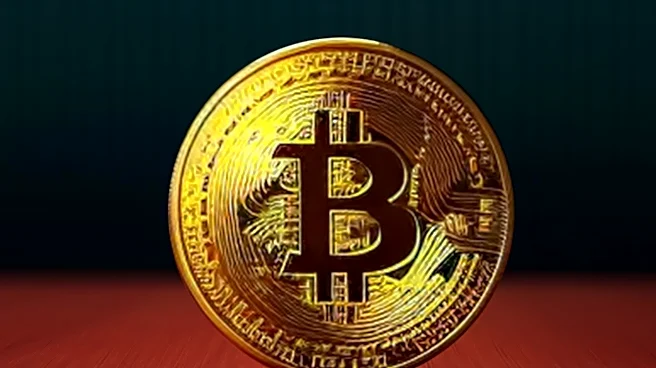
such a transfer was part of a loan agreement with the International Monetary Fund (IMF). Bukele clarified on the X platform that the agreement with the IMF involved the transfer of shares in the Chivo Wallet, a government-developed digital wallet, and not the national Bitcoin reserve. The IMF's press release supports Bukele's statement, indicating that ownership and operational control of the government's e-wallet were transferred to a private operator, and no public funds were used to acquire Bitcoin. The IMF also announced a preliminary agreement to release nearly $140 million to El Salvador as part of a 40-month austerity program, which includes commitments to reduce spending, increase bank liquidity reserves, restrict Bitcoin use, and enhance state transparency. El Salvador became the first country to declare Bitcoin legal tender five years ago, on September 7, 2021, but the initiative has not yielded the promised benefits of better payment access, easier remittances, or foreign investment, with only a small percentage of the population using the cryptocurrency.
Why It's Important?
This development is significant for several reasons, particularly concerning El Salvador's economic stability and its pioneering, yet controversial, adoption of Bitcoin as legal tender. The clarification from President Bukele and the IMF is crucial for maintaining investor confidence and the country's financial credibility. The IMF's involvement and the conditions of its loan agreement underscore the international community's concerns regarding the volatility and transparency issues associated with Bitcoin. While El Salvador's parliament rescinded Bitcoin's legal tender status as part of a previous IMF loan agreement, the country still holds substantial Bitcoin reserves. The commitment to not further accumulate Bitcoin beyond documented donations, as agreed with the IMF, signals a shift towards more conventional financial policies. This situation highlights the challenges faced by nations attempting to integrate volatile cryptocurrencies into their national economies, demonstrating the potential for financial instability and the need for robust regulatory frameworks. The ongoing scrutiny from international financial bodies like the IMF indicates that El Salvador's economic future remains closely tied to its ability to manage its digital asset strategy responsibly and transparently.
What's Next?
Following the preliminary agreement, the IMF is set to release nearly $140 million to El Salvador, which will be part of a larger $1.4 billion loan aimed at strengthening the country's fiscal sustainability and mitigating Bitcoin-related risks. El Salvador's government is expected to implement the agreed-upon measures, including reducing spending, increasing bank liquidity reserves, and restricting the use of Bitcoin. The country will also focus on modernizing its legal, regulatory, and supervisory framework for digital assets and strengthening governance and risk management mechanisms for public sector crypto assets. No further accumulation of Bitcoin holdings beyond documented donations is planned. The success of these measures will be critical for El Salvador's economic recovery and its ability to secure future tranches of the IMF loan. The international community will likely monitor El Salvador's adherence to these commitments, as its experience with Bitcoin continues to serve as a case study for other nations considering similar cryptocurrency adoptions. The long-term impact on El Salvador's economy and its citizens will depend on the effective implementation of these fiscal and regulatory reforms.
Beyond the Headlines
The controversy surrounding El Salvador's Bitcoin reserves and the IMF agreement delves into deeper implications regarding national sovereignty, economic policy, and the future of digital currencies. The initial report, though later clarified, exposed the inherent anxieties and skepticism from traditional financial institutions towards a nation adopting a decentralized digital asset like Bitcoin as legal tender. This episode underscores the ongoing tension between established financial systems, represented by the IMF, and the burgeoning world of cryptocurrencies. While El Salvador initially championed Bitcoin as a path to financial independence and innovation, the need for IMF assistance suggests that the economic realities of such a bold move are complex and challenging. The country's commitment to restrict Bitcoin use and enhance transparency, as part of the loan conditions, could be seen as a concession to conventional financial wisdom, potentially influencing other nations contemplating similar cryptocurrency strategies. This situation also raises questions about the balance between national economic experimentation and the stability offered by international financial support, highlighting the ethical and practical considerations of integrating highly volatile assets into a national economy.