







What's Happening?
Luxury auto CEOs are observing a 'K-shaped economy' even within the high-end market, where ultra-high-net-worth individuals are driving record sales for top-tier luxury vehicles, while middle-tier luxury buyers are showing hesitation. McKeel Hagerty,
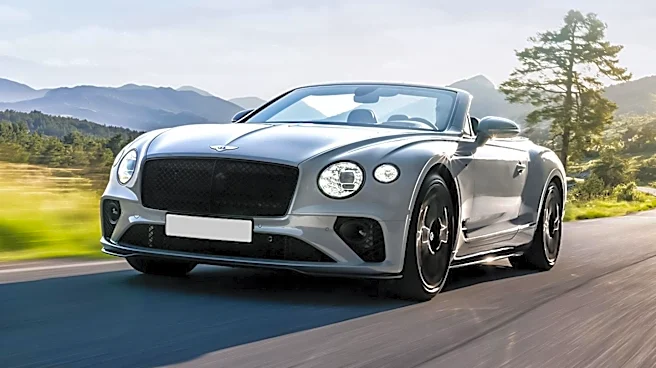
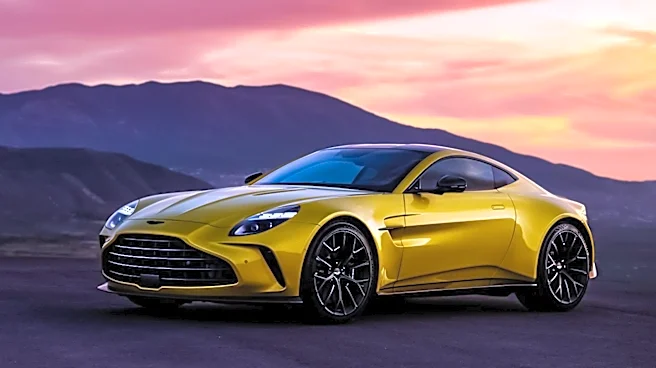
CEO of collector-car insurer Hagerty, confirmed this trend, noting that significant liquidity events like company sales, IPOs, and an overheated stock market are fueling purchases of seven-figure hypercars and classic vehicles. Conversely, factors such as tariffs, high interest rates, and global conflicts are causing anxiety among less affluent luxury consumers. Frank-Steffen Walliser, CEO of Bentley, stated that the top end of their market is experiencing 'very good business' with strong demand, but 'more regular customers' are hesitating. Adrian Hallmark, CEO of Aston Martin, further emphasized this divide, explaining that while the wealthiest and lowest-income groups remain largely unaffected, the middle segment, which typically buys the highest volume of cars, is the most susceptible to economic pressures.
Why It's Important?
This K-shaped economic trend within the luxury auto market signifies a growing disparity in wealth and economic confidence, even among affluent consumers. It indicates that while the very top echelon of wealth is largely insulated from broader economic anxieties, the segment just below them is more sensitive to economic headwinds. This has significant implications for luxury brands, as it necessitates a nuanced marketing and sales strategy to cater to these distinct customer segments. For the U.S. economy, this phenomenon reflects a broader pattern of uneven recovery and wealth distribution, where certain sectors and demographics thrive while others face challenges. The hesitation among middle-tier luxury buyers could signal a broader slowdown in discretionary spending for a significant portion of the affluent population, potentially impacting other luxury goods and services sectors beyond automobiles. This economic stratification could also influence policy discussions regarding wealth inequality and economic stability.
What's Next?
Luxury auto manufacturers will likely continue to focus on catering to the ultra-high-net-worth segment, which remains robust and less sensitive to economic fluctuations. This could involve developing even more exclusive and high-priced models, along with personalized services. For the middle-tier luxury market, brands may need to adjust their strategies, potentially offering more accessible models, flexible financing options, or enhanced value propositions to overcome buyer hesitation. Economic indicators such as interest rates, inflation, and geopolitical stability will continue to influence consumer confidence across all segments. The long-term implications of this K-shaped recovery could lead to a re-evaluation of product portfolios and market positioning within the luxury sector, as companies adapt to a more segmented and polarized consumer base. Industry events like Monterey Car Week will continue to serve as barometers for the health and trends within the high-end automotive market.
Beyond the Headlines
The K-shaped economy in the luxury auto sector highlights a deeper societal trend of wealth concentration and its impact on consumption patterns. It challenges the traditional view of a monolithic 'luxury market,' revealing instead a complex ecosystem where different tiers of affluence respond distinctly to economic conditions. This phenomenon could exacerbate existing social inequalities, as the ultra-wealthy continue to accumulate assets and indulge in high-value purchases, while the broader population, including the upper-middle class, faces increasing economic uncertainty. The psychological aspect of luxury consumption, where purchases are driven by 'want' rather than 'need,' becomes particularly salient in this context. The hesitation of middle-tier luxury buyers suggests a shift in discretionary spending priorities, potentially leading to a more cautious approach to non-essential high-value goods. This could have long-term implications for brand loyalty, market segmentation, and the overall perception of luxury in a world grappling with economic disparities.