










What's Happening?
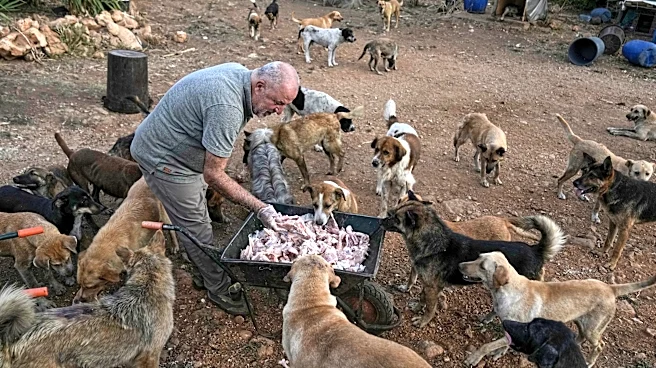
Elwood's Organic Dog Meat, a satirical initiative created by Molly Elwood, has been receiving significant attention and backlash for its provocative approach to animal consumption. The project, which markets itself as a small family farm raising dogs
for meat, is designed to challenge societal norms around eating animals. Despite being clearly labeled as satire, many people believe the farm is real, leading to hate mail and death threats directed at Elwood. The initiative uses language and imagery similar to that of actual farms that raise chickens, pigs, and cows, aiming to provoke thought about the ethics of animal agriculture. The project has gone viral, with millions of website visitors and widespread social media engagement.
Why It's Important?
Elwood's Organic Dog Meat highlights the cultural and ethical inconsistencies in how different animals are perceived and treated. In the U.S., the idea of consuming dogs is met with horror, yet the consumption of other animals like chickens and cows is normalized. This project forces a reevaluation of these norms, questioning why certain animals are deemed acceptable to eat while others are not. It also sheds light on the broader issues of animal welfare and the moral implications of factory farming. By using satire, Elwood's initiative encourages people to confront their own beliefs and the societal structures that support animal consumption.
What's Next?
The continued impact of Elwood's Organic Dog Meat may lead to increased dialogue and awareness about animal rights and the ethics of meat consumption. As the project gains more attention, it could influence public opinion and potentially inspire changes in consumer behavior and policy regarding animal agriculture. The initiative's viral nature suggests that it will remain a topic of discussion, potentially prompting more people to explore plant-based diets or advocate for improved animal welfare standards.
Beyond the Headlines
Elwood's project also touches on the psychological and cultural denial involved in animal consumption. By framing the issue through the lens of eating dogs, it exposes the mental gymnastics required to justify eating some animals while loving others. This approach could lead to a deeper understanding of the social and psychological mechanisms that allow for the continuation of animal exploitation. The initiative serves as a mirror, reflecting the contradictions in human-animal relationships and challenging individuals to reconsider their dietary choices.