







What's Happening?
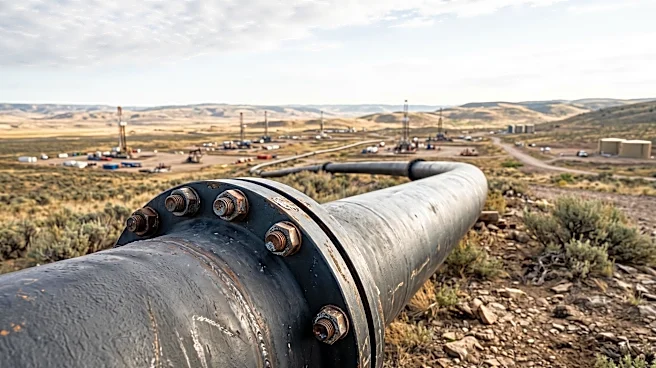
SM Energy, a Denver-based independent producer, is grappling with crude oil transportation constraints in Utah’s Uinta Basin, which have reduced its third-quarter oil production by approximately 4,000 barrels per day. Additional operational downtime in the
Permian Basin further cut volumes by 2,000 barrels per day. The company anticipates these Uinta restrictions will be resolved in early 2027, a critical factor for its development schedule. Despite these challenges, SM Energy reported strong financial results for the third quarter, generating $1.1 billion in operating cash flow and $397 million in adjusted free cash flow. Adjusted net income reached $465 million, or $1.95 per diluted share. The company also redeemed $417 million in senior notes, reducing its net debt to approximately $6 billion from $7.4 billion at the end of March. Shareholder returns totaled $133 million through dividends and stock repurchases, representing about 34% of adjusted free cash flow. For the fourth quarter, SM Energy expects production of 435,000 to 445,000 barrels of oil equivalent per day, including 229,000 to 239,000 barrels of oil per day, with capital expenditures projected at $610 million.
Why It's Important?
The production bottlenecks faced by SM Energy in the Uinta Basin highlight a significant challenge for U.S. energy investors and the broader oil and gas industry: the critical dependence of production growth on infrastructure availability, not just drilling inventory and commodity prices. Insufficient transportation capacity can force producers to defer activity, redirect investment, or temporarily limit output, directly impacting capital efficiency and realized returns. For SM Energy, resolving these Uinta takeaway restrictions is crucial for its 2027 production and cash flow outlook. The company's ability to integrate assets from its merger with Civitas Resources, which closed in January, has yielded approximately $400 million in annualized merger synergies, exceeding initial targets. These savings have helped offset rising oilfield service costs and improved capital efficiency across its operations. However, the ongoing infrastructure limitations underscore the need for strategic planning and investment in midstream infrastructure to support upstream growth in key U.S. basins.
What's Next?
SM Energy is evaluating potential changes to its drilling program for early 2027, contingent on the resolution of the Uinta Basin transportation constraints. The company expects these restrictions to be alleviated in early 2027, which will be a key determinant for its future development schedule. Investors will closely monitor SM Energy's progress in resolving these infrastructure issues, sustaining merger-related savings, and maintaining capital discipline. The company's diversified asset portfolio offers flexibility to assess development opportunities across various basins while infrastructure limitations are addressed. The timing and effectiveness of additional transportation capacity coming online will significantly influence SM Energy's ability to meet its production targets and optimize its capital allocation in the coming year.
Beyond the Headlines
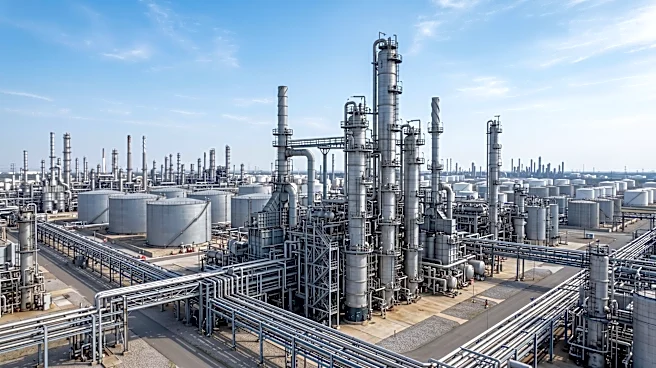
The situation in the Uinta Basin reflects a broader trend in the U.S. energy sector where upstream production often outpaces midstream infrastructure development. This imbalance can lead to localized bottlenecks, price differentials, and reduced profitability for producers, even in periods of high commodity prices. The challenge extends beyond individual companies like SM Energy, impacting regional economic development and national energy security. It also underscores the complex interplay between environmental regulations, permitting processes, and the pace of infrastructure construction. The need for robust and timely infrastructure development is a critical long-term consideration for the U.S. to fully capitalize on its domestic energy resources and maintain its competitive edge in the global energy market. This dynamic also highlights the importance of integrated planning across the energy value chain to ensure efficient resource utilization and sustained growth.