



What's Happening?
Cae's Smash and Grindz, a new smashburger business founded by husband-and-wife team Clarence and Emi Coloma, officially launched in July. The business name is inspired by their daughter, Caemila, and also represents Clarence and Emi. Emi Coloma manages
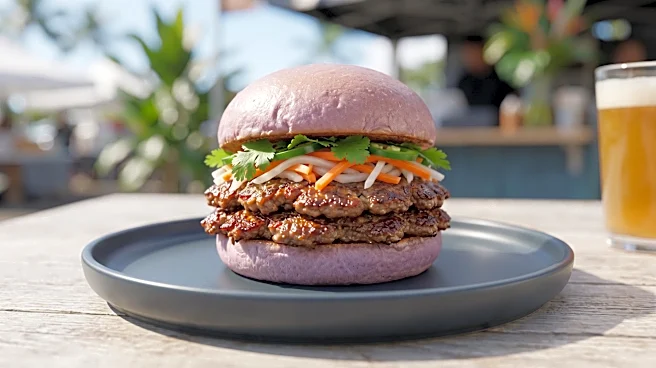
operations, while Clarence Coloma, with a background as an executive chef at Hilton Mission Valley and deli manager at ABC Stores for Island Country Markets, handles the culinary aspects. Their goal was to elevate a classic American staple with local flavors, focusing on fun, fast, and comforting smashburgers. All their burgers feature double beef patties and distinctive ube brioche buns. Popular menu items include 'da bacon and mushroom smash,' which is their top seller, and 'da street banh mi smash.' Other options include 'da jalapeno bacon smash' and 'da island teri smash.' Cae's Smash and Grindz operates through various pop-up events across O'ahu, including regular appearances at Makana Market at Ka Makana Ali'i in Kapolei every Sunday and Wednesday, New Wave Night Market at the Kroc Center monthly, and Pearlridge Center's Village Night Market twice a month. They also recently held a pop-up at What the Truck?! in Waikele.
Why It's Important?
The emergence of Cae's Smash and Grindz signifies a growing trend in the U.S. food industry, particularly in local markets like Kapolei, where small businesses are innovating traditional comfort foods with unique cultural twists. The use of ube brioche buns and local-inspired flavors like 'da street banh mi smash' demonstrates a creative approach to culinary entrepreneurship, catering to diverse palates and potentially setting new trends in the fast-casual dining sector. This business model, relying on pop-up events, offers a flexible and lower-overhead entry point for new food ventures, which can be crucial for economic growth and job creation in local communities. It also provides consumers with more varied and specialized dining options, enhancing the local food scene and potentially attracting food tourism. The success of such businesses can inspire other aspiring entrepreneurs and contribute to the vibrancy of local economies by fostering community engagement through food events and markets.
What's Next?
Cae's Smash and Grindz aims to establish deep roots in the local community during its first year, focusing on building a reputation as a go-to spot for comfort food. The Colomas envision expanding into a permanent food truck in the future, which would allow them to serve the community more consistently and broadly. This expansion would mark a significant step in their business growth, transitioning from a pop-up model to a more fixed presence. Such a move would likely increase their operational capacity, customer reach, and brand visibility. Continued participation in local markets and events will be crucial for maintaining community engagement and building a loyal customer base. The business's progress will be closely watched by local food enthusiasts and other small business owners, as its success could pave the way for similar culinary ventures in the region. Updates on their activities and potential expansion plans are shared via their Instagram page.
Beyond the Headlines
The story of Cae's Smash and Grindz reflects broader societal shifts towards supporting local businesses and appreciating unique, culturally infused culinary experiences. The family-driven nature of the business, with Emi and Clarence Coloma working together, highlights the personal investment and passion often found in small enterprises. Their approach to blending classic American fare with local Hawaiian and Asian-inspired flavors speaks to the evolving American palate and the increasing demand for diverse food options that reflect multicultural influences. This trend not only enriches the culinary landscape but also fosters a sense of community and cultural exchange through food. The reliance on pop-up events also points to a modern entrepreneurial strategy that prioritizes flexibility and direct customer interaction, allowing businesses to test concepts and build a following before committing to more permanent structures. This model can empower local economies by creating accessible pathways for food entrepreneurs.