


What's Happening?
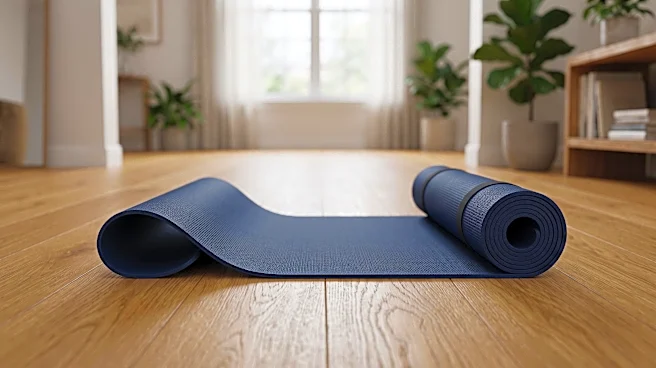
A guide outlines how to build an effective bodyweight back workout, emphasizing that such routines can train the upper, middle, and lower back using no equipment beyond a mat. The recommended approach involves two to three sets per exercise with approximately
one minute of rest between moves. For a standalone session, individuals should select five to six exercises, or two to three exercises if integrating them into a full-body routine. A warm-up of at least five minutes, including light cardio and dynamic movements like arm circles, is advised before starting. The nine best bodyweight back exercises identified are the superman, reverse superman, reverse snow angel, prone pull, back widow, bird dog, plank row, cobra pose, and bodyweight hip hinge. These exercises target various muscle groups, including the erector spinae, rhomboids, trapezius, glutes, and lats, contributing to overall back strength and stability.
Why It's Important?
This approach to bodyweight back training is significant for individuals seeking to maintain or improve back health and strength without access to gym equipment or a dedicated fitness space. The accessibility of these exercises makes them ideal for home workouts, travel, or small home gyms, removing common barriers to consistent physical activity. By focusing on tension and fatigue rather than heavy loads, these routines can still achieve strength and hypertrophy gains, as supported by research indicating that adequate weekly volume and effort are key. Strengthening the back muscles is crucial for supporting posture, improving everyday movement quality, and preventing injuries. The detailed guidance on sets, reps, and rest periods provides a structured framework for effective training, empowering individuals to take control of their fitness regardless of their environment.
What's Next?
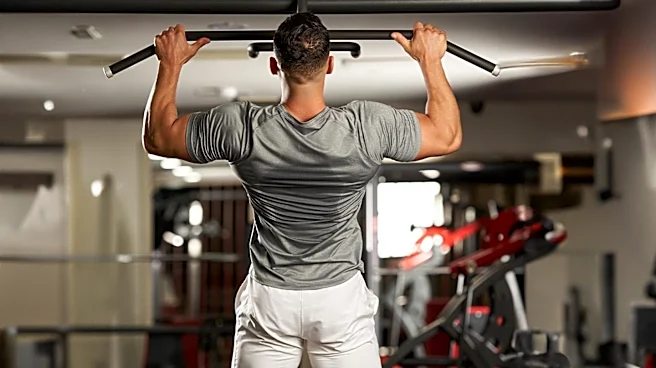
Individuals can immediately begin incorporating these bodyweight back exercises into their fitness regimens. The guide suggests running the nine moves as straight sets or a circuit, with about one minute of rest between exercises to maintain proper form. Progression in difficulty can be achieved by slowing the lowering phase of movements, adding isometric holds, or extending the range of motion, rather than immediately adding external load. For those who find bodyweight exercises no longer challenging after consistent practice, the guide suggests considering the addition of equipment such as a back extension machine or a lat pulldown station to further enhance spinal extension and vertical pulling capabilities. A pull-up bar is also noted as a cost-effective intermediate step for added resistance.
Beyond the Headlines
The emphasis on bodyweight exercises highlights a broader trend towards accessible and adaptable fitness solutions, particularly relevant in an era where home-based activities have become more prevalent. This method underscores the principle that effective strength training does not necessarily require complex machinery or significant financial investment. It also promotes a deeper understanding of body mechanics and muscle engagement, as individuals must focus on leverage, tempo, and range of motion to increase exercise difficulty. The inclusion of exercises that address posture and trunk stability points to a holistic view of fitness, recognizing the interconnectedness of various muscle groups for overall well-being and injury prevention. This approach can foster greater self-efficacy in managing one's physical health.