


What's Happening?
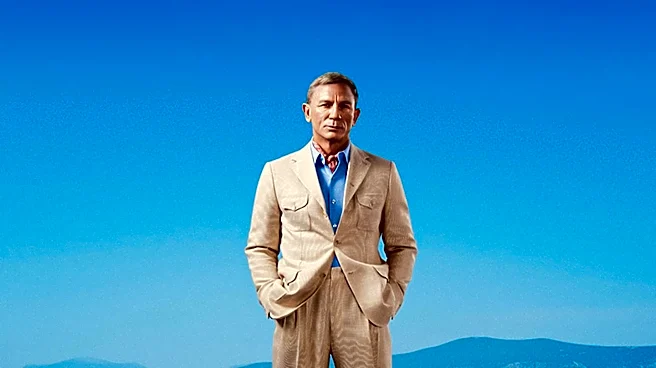
Filmmaker Luca Guadagnino has adapted William S. Burroughs' novel 'Queer' into a recent film, starring Daniel Craig as William Lee, a character based on Burroughs himself. The adaptation has brought renewed attention to Burroughs' work, particularly his
'lost' writings. Burroughs, born in 1914 in Saint Louis, Missouri, came from an affluent family and studied at Harvard. His life was marked by controversial events, including the accidental shooting death of his second wife, Joan Vollmer, in 1951, which he described as a pivotal moment for his literary vocation. Despite his complex personal history, Burroughs is recognized for his unique literary style, including the 'cut-up' technique, which involves reorganizing texts to create a narrative collage. Guadagnino's film adaptation highlights the enduring, albeit often controversial, impact of Burroughs' literary contributions.
Why It's Important?
The adaptation of William S. Burroughs' 'Queer' by Luca Guadagnino is significant for several reasons. It reintroduces a seminal, yet often overlooked, work of American literature to a contemporary audience through the medium of film. Burroughs' experimental writing style and his exploration of themes such as homosexuality, drug use, and existentialism were groundbreaking for his time and continue to provoke discussion. The film's success could lead to a broader re-evaluation of Burroughs' place in American literary history, prompting new academic and public interest in his challenging narratives. Furthermore, the casting of a prominent actor like Daniel Craig in the role of William Lee ensures a wider reach for the film, potentially exposing a new generation to the complexities and controversies surrounding Burroughs' life and art. This cinematic interpretation also underscores the ongoing relevance of counter-cultural figures and their influence on modern storytelling.
What's Next?
The success of Luca Guadagnino's adaptation of 'Queer' could pave the way for further cinematic explorations of William S. Burroughs' extensive and often challenging bibliography. Given the renewed interest in Burroughs' work, publishers might consider reissuing or promoting his other novels, such as 'The Nova Trilogy,' which includes 'The Soft Machine,' 'The Ticket That Exploded,' and 'Nova Express.' Film festivals, like the Venice Film Festival where Guadagnino is expected to be present in 2026, may feature discussions or retrospectives on Burroughs' influence on cinema and literature. Additionally, the film's portrayal of Burroughs' life and themes could spark academic conferences and critical analyses, delving deeper into the ethical and cultural dimensions of his work and its reception in the 21st century. This could lead to a more nuanced understanding of a figure whose personal life often overshadowed his literary achievements.
Beyond the Headlines
Luca Guadagnino's film adaptation of 'Queer' delves into the deeper implications of separating an artist's life from their work, a particularly pertinent issue with a figure as controversial as William S. Burroughs. Burroughs' biography, marked by his admitted involvement in the death of his wife and his candid portrayal of taboo subjects, often complicates the reception of his literary output. The film implicitly raises questions about how society grapples with the art of individuals whose personal actions are deemed morally reprehensible. It highlights the ongoing debate about whether an artist's ethical failings should diminish the value or impact of their creative contributions. This adaptation also underscores the enduring power of literature to confront societal norms and explore the darker facets of the human psyche, even decades after its initial publication. The film serves as a cultural touchstone, prompting reflection on censorship, artistic freedom, and the complex relationship between creator and creation.