







What's Happening?
OutdoorFamilyCamping has published a beginner's guide focusing on essential kayaking strokes for confident lake paddling. The guide emphasizes that learning basic strokes involves controlling the paddle with a relaxed grip, consistent blade placement,
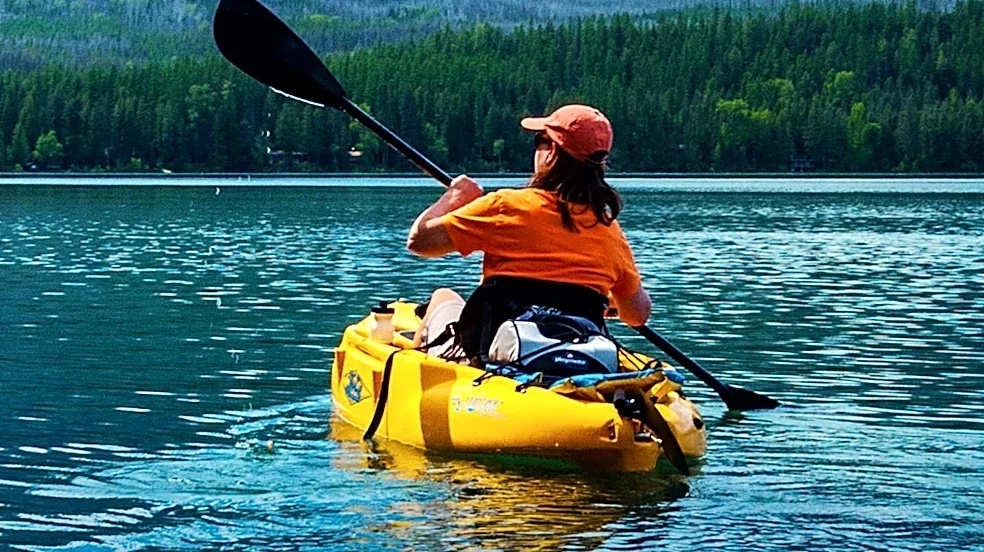
and deliberate torso rotation, rather than relying solely on arm strength. It highlights the importance of choosing sheltered lakes with minimal boat traffic and easy access for initial practice. Key techniques covered include the forward stroke for propulsion, the reverse stroke for slowing, and the sweep stroke for turning. The guide also addresses common beginner errors, such as gripping the paddle too tightly, and provides advice on launching from shallow beaches versus docks. Additionally, it discusses the differences between sit-on-top and sit-inside kayaks, noting that sit-on-tops often feel more reassuring to beginners due to their open seating and easier exit after capsizing.
Why It's Important?
This beginner's guide is important for promoting safe and enjoyable participation in kayaking, particularly for families and new enthusiasts in the U.S. By demystifying basic techniques and offering practical advice on choosing appropriate environments, it lowers the barrier to entry for a popular outdoor activity. This can lead to increased engagement in physical activity and outdoor recreation, contributing to public health and well-being. For the outdoor gear and tourism industries, providing clear, accessible instructions can boost confidence among potential customers, encouraging them to invest in equipment and guided experiences. The emphasis on safety, including capsize response and proper PFD use, is crucial for reducing accidents and ensuring a positive experience for all participants, thereby sustaining interest in the sport.
What's Next?
Beginners are encouraged to practice these strokes in controlled, supervised conditions, ideally with a qualified instructor. The guide advises against kayaking alone after just one lesson, recommending accompanied outings until proficiency and confidence are established. Future steps for new kayakers include gradually extending routes, understanding how to cross moving water (like river outlets), and continuously assessing weather and water conditions. Outdoor recreation providers may integrate these foundational principles into their introductory courses, ensuring a consistent and safe learning experience. The guide's focus on practical, repeatable routines suggests a pathway for continuous skill development, fostering a lifelong enjoyment of kayaking.
Beyond the Headlines
Beyond the technical aspects of paddling, this guide subtly promotes a philosophy of mindful engagement with nature. By encouraging beginners to choose calm waters and focus on controlled movements, it fosters a sense of presence and observation. The emphasis on safety and preparedness also instills a respect for the natural environment and an understanding of personal limits. This approach can cultivate a deeper appreciation for outdoor spaces and encourage responsible recreational practices. Furthermore, the guide's practical advice for families underscores the value of shared outdoor experiences, contributing to stronger family bonds and the development of outdoor skills in younger generations, fostering a legacy of environmental stewardship.