





What's Happening?
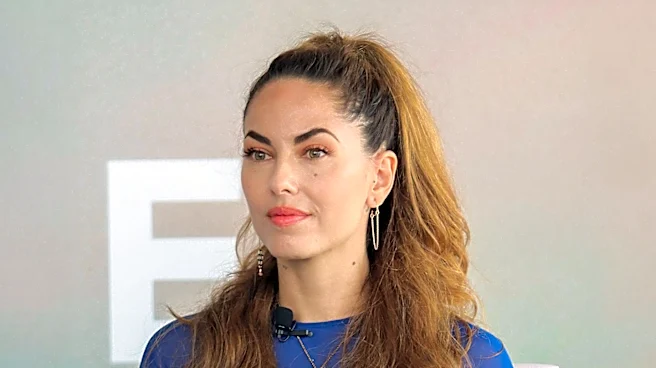
Actress Emily Osment, known for her role as Mandy McAllister on 'Young Sheldon,' revealed she cracked a rib due to wearing a 12.5-pound prosthetic pregnancy belly during filming. The silicone prop, designed to realistically portray her character's pregnancy,
caused significant physical strain over long shooting days. Osment detailed her experience in Jessica Radloff’s book, 'Young Sheldon: The (Juicier-Than-Meemaw’s-Brisket) Inside Story of the Hit Comedy.' She explained that the discomfort led her to seek medical attention, where she attributed the injury to the heavy prosthetic worn for up to 12 hours at a time. The production team reportedly made efforts to accommodate her after the injury, allowing her to sit between takes. Osment joined the series in its fifth season, and her character's pregnancy storyline was central to the show and set up the spin-off 'Georgie & Mandy’s First Marriage.'
Why It's Important?
This incident highlights the often-unseen physical demands placed on actors for the sake of on-screen realism. While viewers see the final polished product, the process can involve significant personal cost, including injuries. The use of heavy prosthetics, though effective for visual authenticity, can lead to unexpected health issues for performers. This situation underscores the need for production teams to carefully consider the ergonomic and health impacts of costumes and props, especially when they involve substantial weight or restrictive designs over extended periods. It also brings to light the contrast between a gradual weight gain in real pregnancy and the immediate, sustained burden of a prosthetic, which actors must adapt to while simultaneously performing demanding roles. The story serves as a reminder of the physical labor involved in acting, beyond just memorizing lines and emoting.
Beyond the Headlines
The physical toll on actors from props and costumes is a less discussed aspect of the entertainment industry. This incident with Emily Osment sheds light on the potential for occupational hazards that are not always apparent. It raises questions about industry standards for actor safety and comfort when using heavy or restrictive equipment. While the goal is often to achieve maximum realism, there's a balance to be struck with the well-being of the performers. This situation could prompt broader discussions within the industry about the design and implementation of such props, potentially leading to innovations in lighter materials or more frequent breaks for actors. It also contributes to a growing awareness of the various challenges actors face, from mental health to physical strain, in bringing characters to life on screen.