




What's Happening?
Kia Corporation, formerly Kia Motors Corporation, has undergone a significant transformation over its eight-decade history, evolving from a manufacturer of bicycle parts into a leading global automobile manufacturer. Headquartered in Seoul, South Korea,
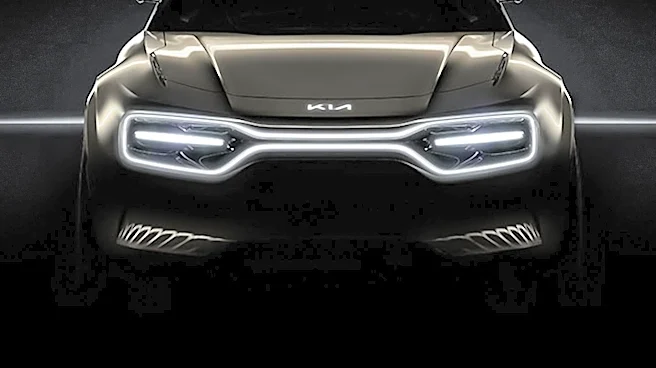
Kia is the oldest automaker in the country and a key component of the Hyundai Motor Group. The company's journey includes producing South Korea's first domestic bicycle in 1951, pivoting to motorized transport in the 1960s with Honda and Mazda licenses, and launching its first passenger car, the Brisa, in 1974. After a period of aggressive expansion and subsequent bankruptcy during the 1997 Asian Financial Crisis, Kia was acquired by Hyundai Motor Company in 1998. A pivotal moment in its transformation was the hiring of Peter Schreyer as Chief Design Officer in 2006, which led to a design renaissance characterized by the 'Tiger Nose' grille and a focus on European-influenced styling. In 2021, the company rebranded as Kia Corporation, dropping 'Motors' from its name, and unveiled a new logo and brand purpose: 'Movement that inspires.' This rebranding coincided with a strong push into electric vehicles (EVs) using Hyundai Motor Group’s E-GMP platform, leading to critically acclaimed models like the EV6 and EV9.
Why It's Important?
Kia's strategic shift towards design-led innovation and electric vehicles holds significant implications for the global automotive industry, including the U.S. market. By focusing on EVs and sustainable mobility, Kia is directly competing with established players and contributing to the broader adoption of electric transportation. Its manufacturing presence in the U.S., specifically Kia Georgia in West Point, produces key models like the Telluride, Sorento, Sportage, and EV9, indicating a substantial investment in the American market and job creation. The company's success in capturing multiple 'World Car of the Year' titles with its EV models demonstrates its growing influence and technological capabilities, challenging perceptions of traditional automotive brands. This transformation also highlights the increasing importance of design and sustainability as key differentiators in a competitive market, influencing consumer preferences and industry trends. For U.S. consumers, Kia's expanded EV lineup offers more choices in the rapidly growing electric vehicle segment, potentially driving down prices and accelerating innovation across the industry.
What's Next?
Kia is poised to continue its expansion in the electric vehicle market with upcoming models like the compact EV3, midsize EV5, and EV4 sedan, further solidifying its position as a leader in sustainable mobility. The company is also venturing into the Platform Beyond Vehicle (PBV) segment, planning to launch modular, purpose-built electric vans such as the PV5 and PV7 for commercial applications like logistics and ride-hailing. This move indicates a broader strategy to diversify its product portfolio beyond traditional passenger vehicles and tap into the growing demand for specialized commercial electric transport. Kia's decentralized production network, with facilities in South Korea, the USA, Slovakia, China, India, and Mexico, will likely continue to play a crucial role in insulating the company against tariff barriers and tailoring vehicles to regional tastes. Continued investment in R&D hubs, particularly in South Korea, will drive future innovations in EV technology and design, ensuring Kia remains competitive in the evolving automotive landscape.
Beyond the Headlines
Kia's evolution from a budget-oriented assembler to a design-led global powerhouse reflects broader shifts in consumer values and technological advancements within the automotive sector. The company's emphasis on design, exemplified by the 'Tiger Nose' grille and European-influenced styling, underscores the increasing importance of aesthetic appeal and brand identity in a crowded market. Furthermore, Kia's aggressive pivot to electric vehicles signifies a commitment to environmental sustainability and a recognition of the long-term trajectory of the automotive industry. This strategic direction not only positions Kia as a forward-thinking company but also contributes to the global effort to reduce carbon emissions and combat climate change. The company's ability to rebound from bankruptcy and reinvent itself through design and technological innovation serves as a case study in corporate resilience and strategic adaptation, offering valuable lessons for other industries facing disruptive changes. The focus on PBVs also hints at a future where vehicles are not just personal transport but integrated solutions for various commercial and societal needs.