





What's Happening?
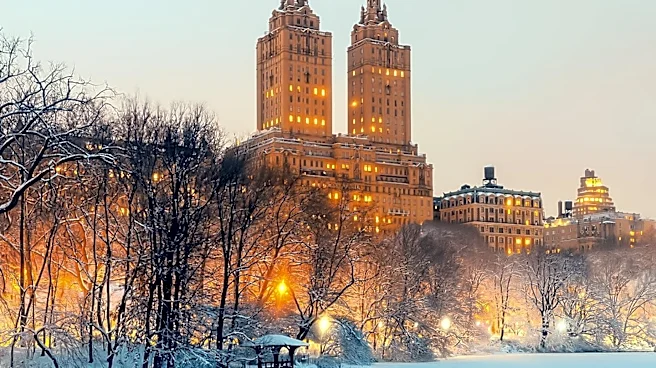
New York City's iconic Dakota apartment building, located on Central Park West, is being highlighted for its rich and often eerie history. Constructed between 1880 and 1884, the building was commissioned by Edward Cabot Clark, co-founder of the Singer
Sewing Machine Company. It gained notoriety as the setting for the classic horror film 'Rosemary's Baby' (1968), though only exterior and courtyard shots were permitted for filming. The Dakota has been home to numerous celebrities, including John Lennon and Yoko Ono, who moved in in 1973. Lennon reportedly saw a crying female ghost, and other tenants and construction workers have reported various paranormal occurrences. Despite its allure, the ultra-exclusive establishment has famously rejected applications from high-profile figures such as Madonna, Billy Joel, Cher, Melanie Griffith, Antonio Banderas, Judd Apatow, Alex Rodriguez, and Gene Simmons.
Why It's Important?
The Dakota's history is important as it intertwines with significant cultural moments and figures in American history, particularly in New York City. Its association with 'Rosemary's Baby' and the tragic death of John Lennon under its archway has cemented its place in popular culture and urban legend. The building's strict exclusivity, evidenced by its rejection of numerous celebrities, underscores its unique status as a symbol of old-money prestige and privacy in a city often defined by its openness. This exclusivity also reflects broader societal dynamics of class and access, even for the most famous individuals. The reported paranormal activities add another layer to its mystique, contributing to its enduring fascination.
What's Next?
The Dakota will likely continue to be a subject of public fascination and historical interest due to its unique architecture, celebrity residents, and rumored paranormal activity. Its status as a landmark and a symbol of New York City's elite residential history ensures ongoing attention from historians, architects, and pop culture enthusiasts. Future discussions may continue to explore the intersection of its architectural grandeur, its role in film and music history, and the persistent tales of its haunted past. The building's continued strict admissions policy will also likely remain a topic of discussion, highlighting the enduring power of exclusivity in prime urban real estate.
Beyond the Headlines
Beyond its celebrity connections and architectural grandeur, The Dakota represents a fascinating study in urban mythology and the psychological impact of historical spaces. The persistent tales of ghosts and paranormal activity, whether factual or folkloric, contribute to a deeper cultural narrative about the past lingering in the present. The building's design, which notably avoided fire escapes in favor of fireproofing with mud from Central Park, also highlights a unique approach to safety and construction in the late 19th century, reflecting different societal priorities and technological limitations. The Dakota's enduring mystique serves as a powerful reminder of how certain structures can become repositories of collective memory, blending historical facts with popular imagination to create a living legend.