





What's Happening?
Ford has commenced shipments of its first lithium iron phosphate (LFP) electric vehicle battery cells from its new BlueOval Battery Park Michigan facility in Marshall. These prismatic cells are being sent to Ford's Louisville Assembly Plant in Kentucky
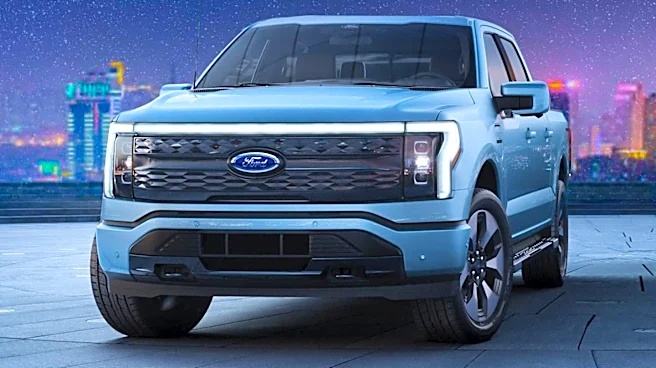
to power early prototypes and validation vehicles of the upcoming Fathom electric pickup truck. The $3 billion, 2 million-square-foot plant has a targeted annual production capacity of 20 gigawatt-hours and is designed to produce 40 cells per minute. Ford expects to employ 1,700 people at the site across two 12-hour shifts. The automaker chose LFP chemistry for its affordability and structural benefits, as it does not use nickel or cobalt, which helps keep costs down. The technology is licensed from CATL, a Chinese battery manufacturer, but Ford asserts the plant is entirely U.S.-owned, staffed, and operated, ensuring compliance with the Inflation Reduction Act (IRA). The facility is a crucial step in Ford's strategy to produce more affordable electric vehicles in the U.S., with the Fathom electric pickup expected to be priced around $28,350.
Why It's Important?
This development is significant for Ford's electric vehicle strategy and the broader U.S. automotive industry. By producing LFP battery cells domestically, Ford aims to reduce manufacturing costs for its EVs, making them more accessible to consumers. This move also helps Ford qualify for clean vehicle tax rebates under the Inflation Reduction Act, which incentivizes U.S.-based production. The establishment of BlueOval Battery Park Michigan enhances the domestic supply chain for EV components, reducing reliance on foreign manufacturers and bolstering U.S. manufacturing jobs. The plant's focus on LFP batteries, which are more cost-effective and durable, could accelerate the adoption of EVs by addressing price concerns. Furthermore, the expertise gained at this Michigan plant will be shared with Ford's Glendale, Kentucky plant, which is being retooled to produce LFP cells for large-scale energy storage applications, indicating a broader impact on energy solutions beyond just vehicles.
What's Next?
Ford plans to have the battery pack manufacturing section of the BlueOval Battery Park Michigan plant operational before the Fathom's launch, with full pack deliveries to Louisville scheduled for 2027. The plant aims to produce 50 battery packs per hour once fully operational. The initial shipments of cells will inform prototype development and further stages of production preparation for the Fathom electric pickup, which is expected to open preorders early next year. Ford will continue to refine its manufacturing processes, aiming for defect rates measured in parts per billion through AI monitoring and rigorous validation testing. The company's strategy involves integrating these domestically produced LFP cells into its Universal Electric Vehicle (UEV) platform, which is designed to be more affordable and structurally efficient. This move is expected to position Ford competitively in the evolving EV market, particularly as it seeks to offer lower-priced electric trucks.
Beyond the Headlines
The opening of Ford's battery plant signifies a broader shift in the automotive industry towards greater vertical integration and localized supply chains, driven by economic incentives and geopolitical considerations. The licensing of technology from a Chinese company while maintaining U.S. ownership and operation highlights the complex global nature of advanced manufacturing and the strategic efforts to balance innovation with national economic interests. This approach could set a precedent for other U.S. manufacturers seeking to leverage established foreign technologies while adhering to domestic content requirements. The emphasis on LFP batteries also points to a growing trend in the EV market to prioritize cost-effectiveness and durability, potentially leading to a more diverse range of battery chemistries being adopted. This could have long-term implications for the sourcing of raw materials and the development of new recycling infrastructures within the U.S., further solidifying the domestic EV ecosystem.