





What's Happening?
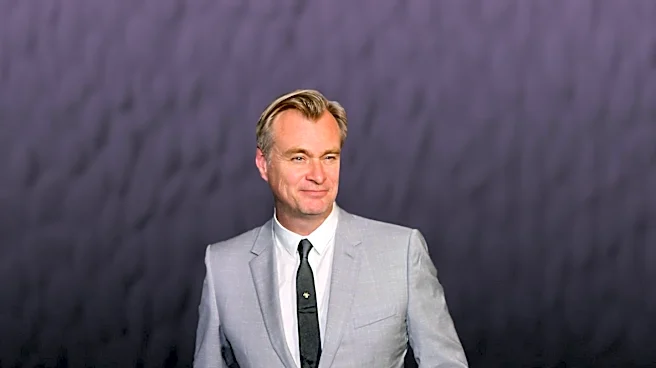
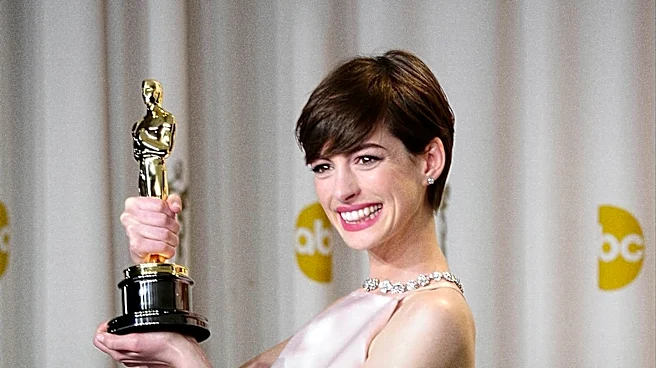
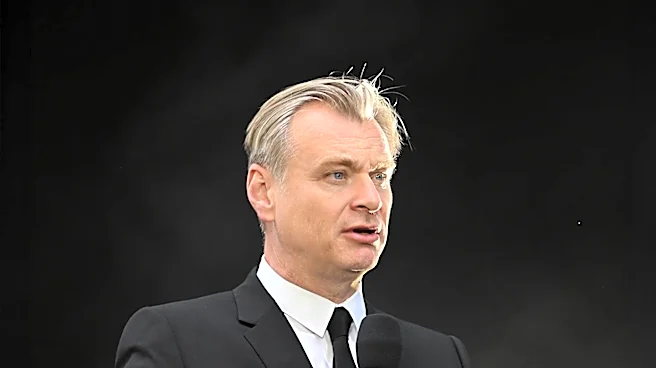
Adam Carolla has recently expressed strong criticism of Anne Hathaway's 2018 speech at the Human Rights Campaign, where she addressed issues related to white, straight men. This speech has resurfaced in light of Hathaway's role in Christopher Nolan's
film 'The Odyssey,' which has become a major box office success. Carolla, along with Dr. Drew, discussed the speech on their show, questioning Hathaway's understanding of privilege and societal myths. The discussion highlighted Hathaway's comments on the perceived centrality of whiteness and straightness in societal narratives. The renewed attention to Hathaway's speech coincides with conservative backlash against 'The Odyssey,' which some critics have labeled as 'woke' due to its diverse casting choices.
Why It's Important?
The controversy surrounding Anne Hathaway's speech and the success of 'The Odyssey' underscores ongoing cultural debates about representation and privilege in Hollywood. Hathaway's comments, which challenge traditional narratives of race and gender, have sparked discussions about the role of privilege in society. The backlash from conservative figures like Carolla reflects broader tensions in the entertainment industry regarding diversity and inclusion. The film's success, despite criticism, suggests a shift in audience preferences towards more inclusive storytelling. This development could influence future casting and production decisions in Hollywood, as studios may seek to appeal to a more diverse audience base.
What's Next?
As 'The Odyssey' continues to perform well at the box office, it is likely that discussions about diversity and representation in Hollywood will persist. The film's success may encourage other filmmakers to pursue similar projects that challenge traditional narratives. Additionally, the backlash from conservative commentators may lead to further debates about the role of political and social issues in entertainment. Studios and filmmakers might need to navigate these discussions carefully to balance artistic expression with audience expectations. The ongoing dialogue could also impact how actors and public figures address social issues in their public statements.